
Online European Roulette Casinos in the UK
 Available in GB
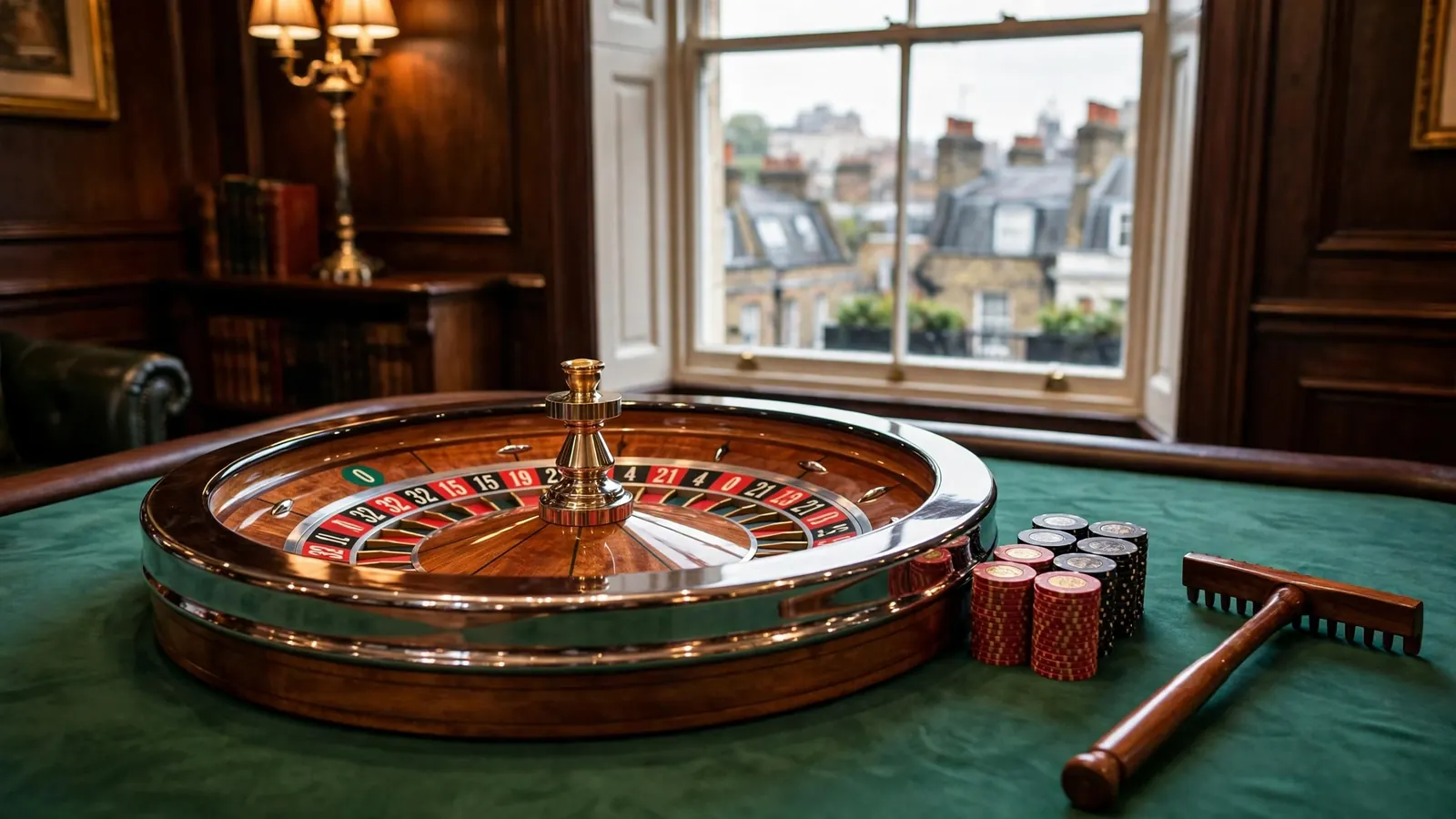
Table of Contents
Understand how UKGC authorisation, roulette rules, bonuses and table formats affect the terms and experience of online play.
What a UK European Roulette Casino Needs to Show
A European roulette lobby is only one part of the check. For real-money play in Great Britain, the operator must hold the relevant licence from the UK Gambling Commission (UKGC), the sole regulator of online casino activity there. A casino’s branding, payment options or presence in a comparison list does not establish that it is authorised to serve British customers.
The licence should be checked against the UKGC’s public register before an account is funded. The register entry needs to match the company operating the casino, not simply a game provider or a similarly named business. A valid UKGC licence is a legal condition, not a quality rating: it does not guarantee that every term is favourable, but it identifies an operator subject to British gambling rules. A platform without a valid UKGC licence cannot legally offer real-money live roulette to British residents.
The same distinction matters when comparing European roulette casinos in the UK. A large game catalogue or a VIP label says little about regulatory status or account terms. Licence verification is the first filter; the information and controls available after that are the next. For a UK-facing casino, these should be visible in the account interface and the operator’s terms, rather than left to inference from promotional language.
RTP information and account access
The return-to-player (RTP) information for roulette should be accessible before play. It may appear in the game’s information panel or rules, but it should be possible to find without treating the game title or its appearance as evidence of its return. Clear access allows the published information to be considered alongside the table’s terms. If RTP details are difficult to locate, that is an information problem, not a reason to assume a more favourable figure.
Age verification is another precondition, not a later account formality. Operators must verify a customer’s age before allowing a deposit into a gambling account. Online gambling is legal in the UK for people aged 18 and over when the operator holds a UKGC licence. A site that permits funds to be deposited before completing the required age check is not following the stated sequence.
Online Casino Games for Real Cash in the UK
Financial controls should also be available at account level. Remote operators must prompt new customers to set a financial limit before their first deposit and provide accessible controls for changing account limits. UKGC-licensed operators must offer deposit limits and loss limits, as well as session time reminders and reality checks. These tools make the cost and duration of play easier to monitor; their presence does not alter the game’s results.
Safer-gambling and complaint controls
A UKGC-licensed casino must also provide cool-off periods and GamStop self-exclusion. These serve different purposes: a cool-off period suspends access for a chosen interval, while self-exclusion is a formal barrier to gambling at participating operators. The controls should be findable from the account or safer-gambling area, with terms explaining how they take effect. A page that merely mentions safer gambling without providing working account controls is not equivalent.
The operator must offer an internal complaints process and access to an approved Alternative Dispute Resolution service. The route for raising a complaint should be stated clearly, including how to reach the ADR service if the dispute is not resolved internally. These details matter because they define the available process when an account or transaction is contested.
Payment terms are part of the same practical check. UKGC licensees cannot accept credit cards for gambling, including credit-card funding routed through a money service business. They also cannot accept wallet payments where the wallet allows credit-card funds to be used for gambling. A payment method’s familiar name does not override the restriction on its funding source.
The practical standard for online casinos with European roulette is therefore documentary and functional: a matching UKGC licence, accessible RTP information, age verification before deposits, and usable limits and safer-gambling tools. Complaint routes and payment restrictions complete the account-level picture. A polished roulette page is packaging; the licence and controls are the terms that determine whether the offer is properly available in Great Britain.
Top online casinos in the UK
- NightWinBonus: £900 + 400 free spins · Payout speed: 1-3 business days
- SpinFormulaBonus: 550% Up To £15,000 + 550 FS · Payout speed: 1-3 business days
- ZombillionBonus: Welcome Pack 250% up to £4000 + 200 FS · Payout speed: 1-3 business days
- JetsetspinsBonus: 200% Bonus + 100 Free Spins + Free Royal Wheel · Payout speed: 1-3 business days
- ChanzeBonus: Slots Welcome Bonus #1 200% up to €500 · Payout speed: 1-3 business days
- EvoSpinBonus: 125% up to €2500 + 125 Free Spins · Payout speed: 1-3 business days
The European Wheel: 37 Pockets and a 2.70% House Edge
A European roulette wheel has 37 pockets: one marked zero and 36 numbered from 1 to 36. The zero is not an extra number in that numbered run; it is a separate pocket alongside it. That count is the basis of the wheel’s standard house edge and the reason the single-zero format has a different cost from a game with more pockets.
A European roulette wheel consists of 37 pockets: 36 numbered from 1 to 36 and one single green zero.
The number of pockets also sets the probability of a particular result. On a single spin, each pocket is one possible landing place. A bet on one number therefore has one winning outcome among 37 possible outcomes. The other 36 outcomes do not match that selection. The relevant point is not merely that the wheel has a green zero, but that the zero occupies a full pocket in the same set of possible results.
The house edge expresses the casino’s expected share of stakes over repeated play, rather than a fee charged separately on each spin. For European roulette, that edge is 2.70%. It does not mean that every individual wager loses that percentage, or that a particular session will finish at a predictable amount. A spin can produce a win or a loss; the percentage describes the long-run average under the game’s standard odds and payouts.
The calculation can be seen through a single-number wager. Consider a stake of one unit on one pocket. If that number lands, the standard return is 35 units of profit, with the original stake also returned: 36 units in total. If any of the other 36 pockets lands, the one-unit stake is lost. Across 37 equally possible outcomes, the winning result produces a net gain of 35 units, while the other results produce a combined loss of 36 units. The balance is a net loss of one unit per 37 one-unit wagers. One divided by 37 is approximately 2.70%, which gives the European wheel’s house edge.
Online casino tournaments in the UK: what to check
This calculation explains why the single zero matters. A wheel with 37 pockets gives a single-number selection one chance in 37, while the payout does not return the full amount that would make the wager break even across all outcomes. The gap between the probability and the payout is the casino’s mathematical advantage. The zero is not a special interruption to the calculation: it is one of the possible results, and its presence affects the value of every wager whose winning conditions do not include it.
The same edge is used as the reference figure for standard European roulette, but it should not be read as a forecast for an individual’s account. Short runs can sit well above or below the expected result. A sequence of wins does not change the pocket count on the next spin, and a sequence of losses does not make any particular number due. Each spin is governed by chance; previous results do not provide a method for identifying the next one.
For anyone comparing an online European roulette casino, the useful starting point is therefore the wheel’s structure: 36 numbered pockets and one zero, making 37 outcomes in all. The stated 2.70% edge follows from that structure together with the game’s standard payout schedule. Different bets can have different chances of winning and different payout amounts, but that does not alter the basic count of the wheel. It provides a fixed mathematical reference for understanding the game, not a promise about what a session will return.
House Edge Calculation
Example: 1 unit stake × 1/37 probability of loss = 2.70% house edge.
A label such as “European roulette” is meaningful only when the game actually uses this single-zero arrangement. The name alone does not change the arithmetic: one zero among 37 pockets is the feature that produces the standard European house edge. For online play, the displayed game information can be checked against that structure before considering other terms. Once the wheel’s pocket count is clear, the 2.70% figure is no longer an isolated statistic; it is the result of the available outcomes and the return attached to a winning single-number bet.
Bonus Wagering: Roulette’s Contribution Is the Cost
A roulette bonus can look generous while contributing little towards the play needed to release its bonus funds. The key figure is game weighting: the share of each qualifying stake that counts towards the wagering requirement. A roulette bet may therefore move the balance towards completion more slowly than its face value suggests.
Across UK operators, roulette weighting is commonly set between 10% and 20%. At that rate, only a fraction of an eligible stake reduces the remaining requirement. A higher contribution rate means less qualifying play is needed to make the same progress; a lower rate means more. The offer’s headline amount does not reveal this cost. Its terms need to state both the wagering requirement and how roulette is treated.
The distinction between live and RNG roulette matters. A specialist review reports that live roulette may receive a 10% or 20% weighting, while RNG roulette is often credited at 100%. These are not universal terms: the operator’s own bonus rules determine the actual rate, and a game’s format alone does not establish that it qualifies. Some offers exclude particular roulette games altogether.
Online Casinos Without ID in the UK: Checks Explained
That makes “roulette counts” an incomplete description. If live play receives only partial weighting, placing a stake does not reduce the outstanding requirement by the full amount. If RNG play receives full weighting under the offer, the whole eligible stake can count. The difference affects how much qualifying activity remains, not the roulette game’s underlying chance of winning.
The practical comparison is between the bonus requirement and the weighted contribution, rather than between bonus amounts alone. A larger offer can carry a greater play-through burden; a lower contribution rate can increase the amount of roulette play needed to clear it. The final calculation depends on the offer’s stated wagering multiple, game weighting, eligible games and any other conditions attached to the bonus funds. Without those terms, a headline figure is packaging, not a usable measure of value.
A specialist review of the 2026 rules reports that, from January 2026, UK regulations limit wagering requirements to a maximum of 10 times the bonus amount for UKGC-licensed operators. That cap sets an outer boundary; it does not mean every offer requires the maximum, nor does it make every game count fully. Game weighting still determines how much of each eligible roulette stake is credited. The cap and the weighting answer different questions: the first limits the total requirement, while the second controls the pace at which roulette play can meet it.
For anyone comparing the best European roulette casino offers, the useful comparison is therefore not a promise of “more play” or a larger bonus alone. It is the specific wagering multiple, the stated roulette contribution, and whether the relevant table is excluded. A free European roulette game or demo can show how the game is presented, but it does not establish that real-money play on that title will count towards a bonus. Bonus terms apply to eligible real-money wagers as defined by the operator.
Attention: A headline bonus amount does not reveal the actual cost of play; you must check the specific wagering multiple and roulette game weighting.
European roulette rules govern how the game operates; bonus rules govern whether a stake qualifies and how much it contributes. Those are separate sets of conditions. A clear offer identifies the contribution for live and RNG roulette, names any excluded games and states the wagering requirement within the regulatory cap. If those details differ across tables, the advertised casino-wide rate is not enough to calculate the actual cost.
Playing for Money: Payouts and the Expected Return
European roulette payouts are quoted as odds against the stake. A winning bet at 35:1 returns winnings equal to thirty-five times the stake, with the original stake also returned. That is the quoted payout, not the total amount received. The distinction matters when comparing a large payout on a narrow selection with a smaller payout on a broader one.
A straight-up bet covers one number. If it wins, it pays 35:1 in European roulette, the same straight-up payout as in American roulette. A split bet covers two adjacent numbers and pays 17:1. A street bet covers a horizontal row of three numbers and pays 11:1. The payout falls as the bet includes more possible winning numbers; the return multiple is not a measure of how likely the bet is to win.
Outside bets cover broader categories. Red or black, even or odd, and high or low each pay 1:1. A winning bet returns winnings equal to the stake, plus that stake. A lower payout does not mean a guaranteed result: any one spin can defeat an outside bet just as it can defeat a single-number selection. The difference is the size of the quoted return when the chosen outcome wins.
| Bet type | Numbers covered | Payout |
|---|---|---|
| Straight-up | One | 35:1 |
| Split | Two adjacent numbers | 17:1 |
| Street | Horizontal row of three | 11:1 |
| Red/black, even/odd, high/low | Category bet | 1:1 |
The table compares payouts, not the chance of winning or the amount that can be lost over repeated play. A higher multiple compensates for a narrower selection; it does not turn a losing result into a profitable one. The same payout figure can therefore look attractive while offering no assurance about the result of the next spin.
Expected return is a separate measure. European roulette has a house edge of 2.70%, so the mathematical expectation over repeated play is a loss of 2.70% of the total amount staked. It is not a deduction from each individual bet, and it does not predict the result of a short session. A player can finish ahead or behind; the edge describes the average built into the game over time.
For anyone comparing ways to play European roulette online in the UK, the useful distinction is between the payout shown for a winning selection and the game’s expected return across all stakes. Playing for real money makes the stake a cash cost, while a free-play version can demonstrate how payouts are displayed without making that cost. A European VIP roulette casino may present the same standard bet categories; the label does not alter the listed return multiples. The arithmetic remains the same: the payout applies only when the selected outcome wins, while every losing stake contributes to the amount put at risk.
Do
- Check the listed return multiples
- Distinguish between payout and expected return
- Use free-play versions to see payout displays
Don’t
- Assume a high payout multiple increases win probability
- Confuse a VIP label with altered arithmetic
- Treat payout odds as a guaranteed result
Single-Zero Bets, La Partage and the Martingale Risk
On a European single-zero wheel, red or black, odd or even, and low or high are even-money bets: a winning selection returns an amount equal to the stake. The zero is outside those categories. Without a special rule, a ball landing on zero means an even-money bet loses, despite the bet’s broad coverage of the numbered pockets.
La Partage changes that result. When zero appears, half of an even-money stake is returned rather than the entire stake being lost. The other half is forfeited. For these bets, that rule reduces the house edge to 1.35%. The reduction applies to the even-money wagers affected by La Partage; it does not turn zero into a winning number or change the outcome of other betting options.
This distinction matters when comparing a single-zero table with its rules stated plainly against one that merely displays the European wheel. The wheel identifies the pockets; the table rules determine what happens to an even-money stake when the ball lands on zero. A single zero, on its own, does not mean that half the stake is refunded. La Partage must be part of the game’s rules.
The effect is limited but measurable. On an ordinary even-money bet, a zero can remove the full stake; with La Partage, it removes half. The adjusted edge is therefore lower for the eligible bets, not eliminated. A player choosing inside bets or other outside bets should not assume that La Partage changes their settlement: its stated effect concerns even-money bets.
Online Bingo UK: Rooms, Tickets and Slot Games
Martingale addresses losing bets with a different mechanism. After each loss, the next stake is doubled, with the intention that a later win can cover earlier losses and leave a return equivalent to the initial stake. The required stake does not rise by a fixed amount. It compounds: each consecutive loss makes the next required wager larger than the last.
That escalation is the cost hidden by the simple instruction to double. A losing run can consume a bankroll quickly, while a later win is not guaranteed to arrive before the available funds are exhausted. The strategy also cannot alter the probability of the next result. Roulette outcomes are determined by chance, so no betting system can predict the final outcome or make a losing sequence end on schedule.
The arithmetic is conditional on both continued funds and the ability to place the next doubled bet. If either condition fails, the recovery plan stops with accumulated losses still outstanding. That is not a defect in the multiplication; it is the practical limit of applying it to finite money.
La Partage changes the treatment of zero on specified even-money bets. Martingale changes the size of the next stake after a loss. Neither changes the wheel’s chance-driven result. One reduces a particular loss; the other increases financial exposure while waiting for a win.
Roulette Wheels, RNG Spins and Table Pace
The choice between RNG roulette and speed roulette changes the rhythm of play, not the basic purpose of the game. RNG roulette uses a random number generator to simulate each spin. Speed roulette is a faster table format, measured by the number of rounds it can complete in an hour. Neither label describes a different set of roulette bets.
RNG Roulette
Uses a random number generator for spins. Often features lower minimum stakes (from 10p) and a faster pace.
Speed Roulette
A faster table format that can complete over 150 spins per hour, compared to 80–100 at standard tables.
Standard Table
Provides a slower pace of play, serving as the reference point for round rates and decision time.
An RNG game removes the wait associated with a table round and can move play along more quickly. Its minimum stakes can also be lower, often starting at 10p. That makes it a distinct option for a player setting a small stake per spin, although a lower entry point does not alter the cost of repeated play. The relevant calculation is the stake multiplied across the number of spins made; faster play can increase that total in less time.
Speed roulette is also built around a higher round rate, but the available figures need to be read as comparisons rather than a promise about every casino table. A specialist review reports more than 150 spins per hour for speed roulette, against 80–100 spins per hour at a standard table. The difference is material: the faster format can complete more than one and a half times the lower standard-table rate, and more than the upper rate as well. The actual pace depends on the format being offered.
These rates describe throughput, not a change in the odds of an individual spin. A quicker cycle does not make any result more predictable, and a larger number of rounds does not improve the return on a bet. It simply creates more opportunities to stake money within the same period. At a fixed stake, the amount exposed rises with the number of spins; at a fixed session budget, faster play can use that budget sooner.
An online casino with European roulette may offer simulated games alongside table formats, so the useful distinction is how each game runs and how quickly it allows another decision. RNG play prioritises quick, individual spins and may have a low minimum stake. Speed roulette is defined here by its higher reported hourly rate. A standard table provides the slower comparison point.
Live Dream Catcher Casino in the UK: What to Check
The European roulette wheel remains the reference game, but the delivery format affects the time available between decisions. A green-zero wheel does not, by itself, tell how quickly a game runs; that depends on whether spins are generated by an RNG or offered in a faster table format. The practical choice is therefore between pace and stake access, not between different assurances about results.
Reading the European Roulette Table Layout
A European roulette table has a numbered betting grid and a single green zero position. The wheel’s 37 pockets are represented on the layout by the numbers 1 to 36 and zero. The grid is the reference point for inside bets; the surrounding areas are used for outside bets.
Inside bets are placed directly on the numbered grid. A chip can cover one number or sit across a boundary between numbers, depending on the selection being made. These positions keep the bet tied to specific numbered pockets. The zero has its own marked space, separate from the numbered cells, so it is not part of the red or black groups or the numbered grid.
Outside bets sit around the grid rather than on individual number cells. Their labels group numbers by a shared feature, such as colour, parity or range. The layout therefore separates two ways of selecting outcomes: a precise position on the grid, or a broader group marked beside it. The difference is visible before any bet is placed; the bet location identifies which selection has been made.
Understanding the Table Layout
The layout separates two selection methods: inside bets are placed directly on the numbered grid (including the separate zero space), while outside bets are placed in labelled areas around the grid to group numbers by colour, parity, or range.
A European roulette casino table layout can vary in appearance between providers, particularly in colour, spacing and chip controls on a digital screen. The working structure remains legible when the number grid, zero position and outside-bet areas are clearly distinguished. On a physical table, the chip is placed on the felt; online, a click or touch selects the equivalent position. In either format, the zero remains part of the European wheel’s single-zero structure, not an extra numbered cell.
The layout is not a prediction tool. A neatly arranged grid can make selections easier to read, but the position of a chip does not change the chance outcome associated with the chosen pocket or group. An alleged European roulette strategy based on choosing a particular area of the table confuses organisation with forecasting. The layout records the wager; it does not signal where the ball will land.
For a quick orientation, locate the numbered grid first, then identify the zero beside it and the labelled groups around the grid. That distinction is enough to read where a selection sits without confusing an individual-number position with an outside group.
Roulette Demos, RNG Games and Lightning Payout Changes
A European roulette demo provides a way to see how a digital game works without placing real-money bets. It can help distinguish the table layout, bet controls and presentation before money is involved. A demo may use the same interface as a cash game, but its results do not create a withdrawable balance. Availability and features depend on the individual game and operator.
Online Slot Payout Percentages and What RTP Means
The presentation can vary without changing the basic format. Some titles use a three-dimensional view of the wheel; others use gold or platinum styling. Those are visual treatments, not evidence of different roulette mechanics. The useful comparison is whether the game is a standard European roulette simulation or a feature-led version with altered terms.
RNG roulette creates spins using a random number generator rather than a physical wheel. That format can support faster play and lower minimum stakes, with some games allowing stakes as low as 10p. A demo can therefore show the digital interface and pace, while a real-money version introduces actual stakes. Neither the graphics nor the demo label changes the need to check the rules shown for the specific game.
Lightning Roulette changes the straight-up payout when no lightning multiplier applies. A specialist review reports that this payout is 29:1 rather than the 35:1 used for a straight-up bet on standard European roulette. That difference matters: the same single-number selection does not necessarily carry the same return in the feature game. Any multiplier feature should be read as a separate condition, not assumed to restore the standard payout on every winning number.
The specialist review also reports that outside bets in Lightning Roulette retain standard roulette odds. Red or black, even or odd, and high or low therefore sit apart from the altered straight-up payout. The distinction is narrow but material: a feature can change one bet category without changing every bet on the table.
Demo play is useful for checking those displayed terms before staking money, particularly where the title uses special features or a different presentation. It does not establish that a real-money game has identical conditions across operators. The paytable attached to the selected game is the operative detail; the artwork is not.
Attention: In Lightning Roulette, the straight-up payout is reduced to 29:1 instead of the standard 35:1 when no lightning multiplier is applied.
Live Dealer Roulette: Real Wheels, Limits and Licensing
Live dealer roulette is a studio broadcast of a physical wheel. A human dealer releases the ball, and the result comes from its landing pocket rather than a simulated spin. The camera feed lets players follow the same wheel and ball drop as the dealer’s table activity unfolds.
For a live European roulette table, the minimum stake is set by the operator and game. A specialist review reports UK live-table minimums starting at 10p; auto-roulette and speed formats sometimes start at 5p. These are reported starting points, not a promise that every table will offer them. The stake shown on the selected table is the operative term.
The legal condition is firmer. The UK Gambling Commission (UKGC) is the sole regulator of online casino activity in Great Britain. An operator offering real-money live roulette to British residents must hold the relevant UKGC licence; a platform without a valid licence cannot legally provide that service. The operator’s location does not remove this requirement when it sells into the British market.
Before any deposit, the licence number should be checked against the UKGC public register. UKGC licensees must verify age before allowing deposits, make roulette RTP information accessible, and offer an internal complaints route with access to an approved Alternative Dispute Resolution service. A studio feed is evidence of a real wheel, not evidence of the operator’s regulatory status.
Live casino operators must also provide account controls: deposit limits, loss limits, session time reminders, reality checks, cool-off periods and GamStop self-exclusion. New customers must be prompted to set a financial limit before the first deposit, with account-level limit controls available thereafter. UKGC-licensed casinos cannot accept credit cards for gambling, including credit-card funds routed through a money service business or a wallet that permits credit-card funding for gambling.
These controls sit alongside the table’s own minimum stake. A low entry amount does not replace account limits, and the live format does not create an exception to the licensing requirement.
French Roulette Online Casinos in the UK
European vs American Roulette: The Extra Zero Has a Price
The practical difference between a European roulette casino game and its American counterpart is the number of losing pockets built into the wheel. European roulette has 37 pockets: numbers 1 to 36 and one zero. American roulette adds a double zero, bringing the total to 38. That extra pocket changes the cost of a bet even when the chosen number or colour is otherwise the same.
The house edge is 2.70% on European roulette, compared with 5.26% on American roulette. The gap is 2.56 percentage points. Over repeated play, the American format therefore retains a larger expected share of stakes. The posted payout for a winning bet may look familiar, but the additional zero makes a win less likely; the price is in the probability, not necessarily in the payout display.
American roulette also has a basket bet covering zero, double zero, 1, 2 and 3. Its house edge is 7.89%, higher than the American game’s overall figure. A named betting area is not a discount: this one carries a steeper disadvantage than ordinary American bets.
There is a further variation to watch for in online listings. A specialist review reports that some American roulette tables offered by UK online casinos include a third green pocket marked 000. For that version, the reported house edge is 7.69%. This is a reported table variation, not a feature to assume across the market; the wheel shown in the game rules determines which version is being offered.
For a like-for-like choice, the pocket count and stated house edge are the relevant terms. A single-zero European wheel has the lower house edge; American roulette adds another zero, and the basket bet costs more again. The table label alone does not settle the detail where a 000 pocket is involved, so the listed wheel and rules matter.
What is the house edge on European roulette compared to American roulette?
European roulette has a 2.70% house edge, compared with 5.26% for standard American roulette. Some American tables with a third green pocket marked 000 have a 7.69% edge.
What are inside and outside roulette wagers?
Inside bets cover specific numbers or small number groups, such as straight-up bets on one number, splits on two adjacent numbers, and streets on three numbers. Outside bets cover broader outcomes, such as red or black, even or odd, and high or low.
How does roulette actually work?
Players place bets on where the ball will land on a spinning wheel, and the result is determined by chance. A European wheel has 37 pockets—numbers 1 to 36 and one zero—while a standard American wheel has 38, adding a double zero.