
Casinos That Accept Revolut in the UK
 Available in GB
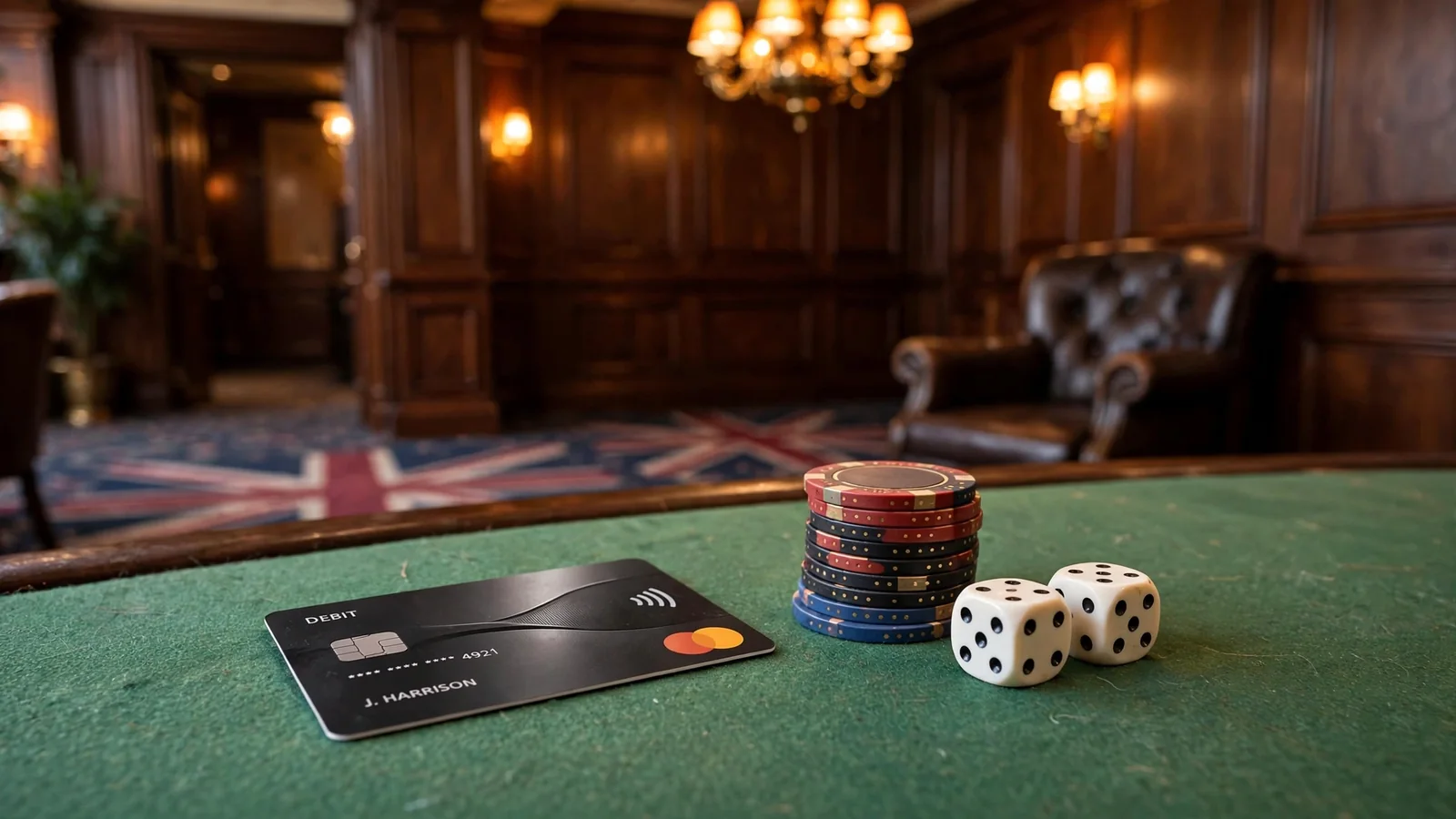
Table of Contents
Card eligibility, cashier options, return-to-source rules and payment-linked bonuses can all affect deposits and withdrawals.
How Revolut Fits into a UK Casino Cashier
Revolut acceptance is not a property shared by every UK casino. It is a decision made at the level of each operator’s cashier, and the available payment options can differ between sites. A casino’s general payment information, an old review or a mention elsewhere cannot establish that Revolut is currently offered for a particular account. The practical test is whether the cashier presents an eligible Revolut route when that account is being used.
That distinction matters because “accepts Revolut” can describe different things. A site might display a card network that Revolut uses without confirming that a particular Revolut card product can fund a gambling transaction there. It might also present payment options that change over time or are limited by the customer’s location, account or product. A payment logo is evidence of a stated route, not a guarantee that every card or account under that brand will work.
Some specialist casino reviews list Visa and Mastercard among the payment options at sites they cover. Those listings are useful as a starting point, but they do not replace the current cashier check: UK availability and eligibility for a specific card product still need confirmation there. The same caution applies to broad claims about Revolut. A list of casinos described as Revolut casinos cannot reliably mean that every listed site will show the same option to every customer.
The cashier is the relevant point of verification because it shows the methods the operator makes available for the account at the time of the transaction. If Revolut is absent, that does not establish that the account has a fault or that Revolut has stopped working across the market. It establishes only that the option is not presented in that cashier under those conditions. Conversely, seeing an option is not the same as a completed deposit; the transaction still depends on the payment being accepted and processed.
Casinos That Accept XRP in the UK: Payment Checks
This is why an all-inclusive list is a weak way to judge availability. It can flatten several separate conditions into a single label: whether the casino offers the route, whether the option is available in the UK, and whether the particular account and payment product qualify. Those are not interchangeable checks. A result that was accurate for one customer, at one point, may not describe another customer’s cashier.
The same applies to descriptions such as “best” or “new”. Those labels do not answer the operational question. A bonus or game selection does not confirm that Revolut appears as a funding option, and a site being newly presented or reviewed does not settle whether the cashier currently accepts a given route. Other terms can be assessed separately, but they cannot substitute for that confirmation.
Account ownership details are another part of keeping a transaction straightforward. When the casino account and payment route are registered to the same customer, there is less room for a basic mismatch in names or ownership to complicate processing. Consistent use of one named account for funding and cashing out is the clearest arrangement. This is not a promise that every transaction will go through; it removes an avoidable source of friction rather than overriding the operator’s checks.
The decision therefore belongs to the individual cashier, not to a market-wide label. An accurate description should avoid treating Revolut acceptance as universal or presenting a static list as a permanent assurance. The cashier’s current options provide the direct answer for that account. If Revolut is shown, its availability has been established at that point; if it is not, the label attached to the casino elsewhere does not make it available.
For a UK customer assessing a casino, the distinction is simple but consequential: a payment method mentioned in a review is an indication to investigate, while a method displayed for the account in the casino’s cashier is the relevant availability check. Even then, the displayed option is only one part of the transaction conditions. The account and payment details must correspond, and the payment must be accepted. That is a more precise basis for judging whether a casino currently accepts Revolut than assuming that one site’s listing applies across the market.
Checking the casino cashier is the only way to verify if Revolut is currently available for a specific account, as general payment logos or reviews are not guarantees of eligibility.
Top online casinos in the UK
- NightWinBonus: £900 + 400 free spins · Payout speed: 1-3 business days
- SpinFormulaBonus: 550% Up To £15,000 + 550 FS · Payout speed: 1-3 business days
- ZombillionBonus: Welcome Pack 250% up to £4000 + 200 FS · Payout speed: 1-3 business days
- JetsetspinsBonus: 200% Bonus + 100 Free Spins + Free Royal Wheel · Payout speed: 1-3 business days
- ChanzeBonus: Slots Welcome Bonus #1 200% up to €500 · Payout speed: 1-3 business days
- EvoSpinBonus: 125% up to €2500 + 125 Free Spins · Payout speed: 1-3 business days
Payment Routes to Check When Revolut Is Unavailable
If Revolut is not offered in a casino cashier, other payment routes may still be available. The alternatives are not interchangeable: some are linked directly to a bank account, some use a separate payment account, and others rely on a debit card or a prepaid balance. Availability depends on the individual site, so a method’s presence elsewhere does not establish that it will appear at a particular casino.
Debit cards are the most straightforward alternative to check. UK casinos commonly accept Visa and Mastercard debit cards, although the cashier remains the place to confirm what is currently supported. A card payment uses the card’s own deposit route rather than Revolut’s account or card. That makes it a practical comparison when the aim is to fund an account without using a separate e-wallet. The card still needs to be eligible for gambling payments, and a payment option shown in general site information is not a guarantee that every card product will work.
Casinos That Accept Boku in the UK: Payment Guide
Open banking and bank transfers are another route. They connect a payment to a bank account rather than to a card or a stored e-wallet balance. A specialist review describes these services as capable of supporting instant deposits and fast withdrawals at many sites; that is a reported feature, not a promise about every operator or transaction. The cashier should identify the available service and the direction of payments it supports. A bank transfer option should not be assumed to work identically to an open-banking payment, even though both involve a bank account.
PayPal offers a different structure: it acts as an intermediary between the casino and the player’s payment source. A specialist review describes it as popular for speed and convenience, but that does not make it universally available or eligible for every promotion. The route is worth checking where it appears in the cashier, particularly when an existing PayPal account is already used for other online payments. Promotion terms need separate attention; the payment method alone does not determine whether an offer applies.
Skrill and Neteller are e-wallet alternatives listed at some casino sites. A specialist review reports that both are often excluded from promotions, so the apparent convenience of an e-wallet can come with a separate promotional condition. That condition should be checked before funding an account, rather than inferred from the fact that the cashier accepts the wallet. The payment route and the offer terms are separate parts of the transaction.
Casinos That Accept E-Wallets in the UK
Apple Pay is another possible deposit route. Some UK Gambling Commission-licensed casinos accept it for deposits, but that does not establish that it is offered by every licensed site or that it supports withdrawals there. Its presence in a cashier is therefore a site-specific option, not a general substitute available across the market. The same distinction applies to any payment service displayed on a casino’s payment page: the stated function matters, and deposit availability should not be read as proof of a full payment cycle.
The useful comparison is functional rather than promotional. A debit card is tied to a card issuer; open banking and bank transfers use a bank-account route; PayPal, Skrill and Neteller use e-wallet accounts; Apple Pay can appear as a deposit route at some licensed casinos. Those categories describe how a payment is initiated, not whether a specific casino will accept it, whether a customer’s account qualifies, or whether it can be used for every transaction.
Debit Cards
Commonly Visa and Mastercard; used as a direct route without a separate e-wallet.
Bank Transfers
Includes open banking and direct transfers; connects directly to a bank account.
E-Wallets
Includes PayPal, Skrill, and Neteller; acts as an intermediary account.
Apple Pay
Available at some UKGC-licensed casinos primarily as a deposit route.
For a Revolut user, the sensible shortlist is therefore limited to methods that appear in the chosen cashier and match the intended use. A card route may be direct, an e-wallet may require an existing wallet account, and a bank-linked service may require authorisation through the bank. No alternative should be treated as guaranteed merely because it is familiar or accepted by other merchants. The cashier’s current options and the operator’s stated terms determine what can actually be used.
A method that is available for deposits may also carry conditions elsewhere, including promotional eligibility or restrictions on its role in the account. Those details can change the practical value of an option without changing its name on the payment page. For a clean comparison, the relevant questions are whether the route is displayed, whether it supports the intended payment direction, and whether its terms fit the transaction. A familiar logo is only the starting point; the cashier is the operative record.
Revolut Card Deposits, Eligibility and Minimums
A casino cashier listing Visa or Mastercard does not, by itself, confirm that a Revolut card can fund an account. The logo identifies a card network; it does not settle whether that casino currently accepts the particular card product for deposits. A specialist casino review lists Visa and Mastercard among supported methods, but current UK availability and product eligibility need to be checked in the cashier.
Casinos That Accept POLi in the UK: How to Check
That distinction matters when assessing whether a casino accepts Revolut deposits. A Revolut debit card may display a Visa or Mastercard logo, yet the casino’s payment screen is the place where its current options are presented. A general payment-method page can establish that card deposits are offered without confirming that every card on the network will work. Treating those two statements as interchangeable turns a broad listing into a promise it does not make.
The practical check is narrow: open the casino account’s deposit area and see whether the card route is offered for that account and transaction. If the cashier names Visa or Mastercard, that is relevant but not conclusive for a Revolut card. If it does not show an available card route, a casino’s general description of card payments does not fill the gap. The outcome is specific to the cashier and the card product, rather than a universal answer about Revolut across UK casinos.
What the minimum tells you
Acceptance and minimum deposit are separate conditions. A card can be eligible while the proposed deposit falls below the cashier’s stated threshold. Conversely, a displayed minimum does not establish that a particular Revolut card is accepted. Both conditions need to be satisfied before the amount can be treated as a workable entry cost.
A specialist casino review places the typical minimum-deposit range at £10–£20, with the amount depending on the payment method selected. That range is a guide to the level a casino may set, not a fixed Revolut tariff or a guarantee for every cashier. The method selected can affect the threshold, so a figure shown for another deposit route should not be carried across to a Revolut card without checking.
Do
- Check the card route in the deposit area
- Verify the amount meets the stated minimum
Don’t
- Assume a network logo guarantees card acceptance
- Apply a minimum from another payment route
The amount shown in the cashier is the operative figure for the transaction. If the displayed minimum is higher than the intended deposit, the card may still be supported, but that deposit amount will not meet the entry condition. If the minimum is lower, that does not prove that the card will pass the casino’s eligibility check. The calculation has two inputs: a supported card route and an amount at or above its stated minimum.
Queries about casinos accepting Revolut debit cards therefore have a conditional answer rather than a market-wide yes or no. The network logo is one part of the check; the cashier’s current card options and the card-product eligibility are the other. A published Visa or Mastercard listing can be useful orientation, but the deposit screen determines whether it applies to the account in question.
No-deposit promotions and free spins are separate from card acceptance and from the minimum required to make a deposit. A casino’s payment listing cannot establish that a promotion exists, nor that a particular payment method qualifies for it. Those terms belong to the promotion itself and should not be inferred from a card logo or a low deposit threshold.
For a real-money deposit, the decision can be reduced to two checks: whether the cashier makes the card route available, and whether the planned amount meets the minimum displayed for that route. The range of £10–£20 gives a bounded reference point; it does not replace either check. A Revolut card is not confirmed as accepted merely because Visa or Mastercard appears on a casino’s general list, and a minimum shown for another method is not the right figure to use.
Casinos That Accept Ethereum in the UK: What to Check
Using a Payment Method for Online Slots
Searching for online or mobile slots funded through Revolut combines two separate questions: whether a casino offers slot play on the chosen device, and whether its cashier accepts the intended Revolut payment route. A slot lobby does not establish payment acceptance, and the presence of a Revolut card does not establish that it will work for a particular deposit. The relevant check is the casino’s current cashier, not the game category or the device used.
UK casinos commonly accept debit cards, including Visa and Mastercard. That does not make every card product eligible, nor does it confirm that Revolut will appear as an available option for a particular account. A casino may list a card network while applying its own acceptance checks at payment stage. For mobile play, the same distinction applies: access to a casino on a phone does not create a separate payment entitlement. The cashier’s available methods remain the deciding factor.
Terms such as “Revolut slots” can also obscure what is being offered. Slots are casino games; Revolut is a possible way to fund an account. It is therefore more precise to establish whether the casino accepts the payment method than to treat the games themselves as Revolut products. A “pay by Revolut” label should be read as a claim about a transaction route, not proof that every Revolut card or account will be accepted.
A “free slots” description does not establish that Revolut is involved at all. Free-play access and real-money funding are different conditions. Where real-money play is intended, the cashier must show an available route and accept the payment details. Where a page merely labels games as free, that label alone says nothing about whether deposits are accepted or whether the games are being played for money.
Slot game categories and device access do not establish payment acceptance; the casino cashier remains the deciding factor for funding.
Payment availability does not alter the rules governing online slots in Britain. Online slot autoplay is banned, and each spin must last at least 2.5 seconds. The maximum stake per game cycle is £5 for customers aged 25 and over and £2 for those aged 18 to 24; the £5 limit for all adults took effect on 9 April 2025. These restrictions apply regardless of whether a deposit is made using Revolut or another accepted method.
Real-money casino play is legal in the UK only through a site holding the relevant UK Gambling Commission licence. The payment method is not evidence of a site’s licensing status. For a Revolut-funded slot session, the practical sequence is therefore narrow: confirm that the casino is licensed, check that the cashier offers and accepts the intended payment route, then assess the slot rules that apply to the play itself. A phone screen changes the format, not those conditions.
Real-Money Slot Play and the Credit-Card Boundary
For real-money slot play at a UK-licensed casino, the relevant boundary is the source of the funds, not the name attached to a payment app or card. The regulator prohibited credit-card gambling on 14 April 2020, and the rule remains in force. A casino operating under a UK Gambling Commission licence cannot accept credit-card payments for gambling.
That distinction matters when a payment route has several layers. A card transaction, a digital wallet and a money service business do not make credit-funded gambling permissible simply by changing the route through which the money passes. Remote gambling licensees cannot accept credit-card payments routed through a money service business, and they cannot accept wallet payments where the wallet allows credit-card funds to be used for gambling. The route is not a loophole; the underlying funding source still matters.
Casinos That Accept Solana in the UK: What to Know
A payment brand alone does not establish whether a particular transaction is permitted. A Revolut-branded payment option should not be treated as automatically eligible for real-money gambling merely because it appears in a casino cashier. The relevant distinction is whether the selected product and transaction are permitted for gambling, rather than whether the service is familiar or has previously worked for another type of purchase. Casino acceptance and product eligibility are separate checks.
This also separates real-money play from free access. A slot may be available to play without staking money, but that does not alter the payment rules for a later cash deposit. Once funds are being added for gambling, the credit-card restriction applies. Descriptions such as “no deposit” do not establish that a payment method is accepted or that real-money play can be funded without a deposit; those are different conditions.
The practical result is narrow but important: credit cards are not a permitted funding route for gambling at UK-licensed casinos, whether used directly or passed through a qualifying intermediary or wallet. A compliant payment route must not use credit-card funds for the gambling transaction. This boundary applies to real-money slots just as it does to other forms of gambling, so a casino’s acceptance of a payment service for non-gambling purchases would not prove that it can be used to fund a gambling account.
Credit Card Ban
UKGC-licensed casinos are prohibited from accepting credit-card payments for gambling, including those routed through wallets or intermediaries.
The ban is a fixed regulatory condition, not a preference that can be negotiated through a cashier setting. If a payment attempt appears to involve credit funds, the transaction should not be treated as an acceptable way to fund slot play. The payment method’s label is less decisive than the source and permitted use of the money.
Deposits, Withdrawals and the Return-to-Source Rule
A deposit and a withdrawal are separate stages of a casino transaction. A Revolut card payment may reach the casino promptly, but that does not mean winnings will be returned at the same speed or through the same route. A specialist review reports that a card deposit can be instant while a payout may take several business days. The deposit time is therefore a poor estimate of when a cash-out will arrive.
UK anti-money laundering rules generally require payouts to go back to the original payment source. This closed-loop approach means that a Revolut deposit does not, by itself, establish that a casino can pay winnings directly to a Revolut account. The cashier and the operator’s withdrawal rules determine which route is available, and an alternative route may require further checks. A payment method should not be treated as both a deposit and withdrawal option unless the cashier confirms both functions.
The time shown for a withdrawal can include more than the transfer itself. A specialist review notes that the casino’s internal approval forms part of the processing period, and that a first withdrawal may take longer while verification is completed. KYC can involve confirming identity and checking that the payment account belongs to the customer. Until the casino has approved the request, a fast payment provider cannot remove that internal stage.
Casinos That Accept USDC in the UK: Payment Guide
For a Revolut-funded account, consistent ownership details help avoid preventable friction: the casino account and payment route should belong to the same customer. If the cashier requests documents or account information, a mismatch may delay approval or lead to a request for another withdrawal method. That is an administrative issue, not evidence that a deposit failed.
The practical distinction is between a deposit being accepted and a withdrawal being authorised and delivered. A successful Revolut deposit confirms only the funding leg. The return route remains subject to the casino’s cashier, closed-loop rules and any outstanding verification. A displayed withdrawal estimate should therefore be read as conditional on approval, not as a promise that the money will arrive as soon as the deposit did.
Bonuses Depend on the Payment Method
A Revolut deposit and a welcome bonus are separate conditions. A cashier may accept a payment route while the promotion terms exclude deposits made through it. The presence of a bonus banner, code field or welcome offer does not settle eligibility; the relevant clause is the one that defines which payment methods qualify.
This distinction matters when assessing a Revolut-funded casino bonus. A card deposit does not establish that a particular card product is eligible, and the use of Revolut does not itself activate a promotion. The offer’s terms determine whether the deposit counts. If those terms are unclear, the bonus value should not be treated as part of the available balance.
Payment-method exclusions also apply to other routes. A specialist casino review reports that PayPal can be excluded from bonus eligibility, despite its popularity for speed and convenience. A specialist review also describes Skrill and Neteller as often excluded from promotions. Those statements describe reported promotion conditions, not a rule that applies to every casino or offer; the operator’s current terms remain decisive.
Attention: A cashier may accept a payment method for deposits while the promotion terms explicitly exclude that method from bonus eligibility.
The practical check is narrow: find the promotion’s payment-method clause and compare it with the method selected for the deposit. If Revolut is not named, the general listing of Visa or Mastercard does not by itself confirm that the bonus will qualify. If an e-wallet is excluded, depositing through it may leave the account eligible to play but ineligible for that promotion.
The same test applies to a slots bonus, a no-deposit offer or a code-based promotion. The label describes the offer; it does not override its eligibility conditions. A code can be valid while the chosen payment method fails the promotion’s requirements. Likewise, a casino accepting Revolut for real-money play does not prove that a Revolut-funded deposit qualifies for a welcome bonus.
For a meaningful comparison, separate the advertised bonus from the deposit route and record the condition that links them. Where the terms exclude the selected method, the bonus should be valued at zero for that transaction. Where they do not specify whether Revolut qualifies, eligibility is unresolved until the operator confirms it.
Minimum Deposits, Limits and Currency Checks
The amount accepted at the funding stage is set by the casino and the selected payment route, not by Revolut alone. A specialist review puts the typical minimum deposit range at £10–£20, with the required amount depending on the method. That is a reference point, not a promise that every cashier offers the same entry level. A £5 deposit should not be assumed to work: the amount shown in the cashier is the operative minimum for that account and payment option.
Casinos That Accept Citadel UK: How to Verify
The same check applies when looking for an instant deposit. A payment route may appear in a casino’s information, but the cashier determines whether it is available for the account and what minimum it accepts at the time of payment. If Revolut is offered, the displayed amount still matters. A successful payment cannot be inferred from the method’s name alone.
Maximum deposits are a separate constraint. A specialist review reports that limits can differ by payment method and account status, and may apply per transaction, per day or per month. The relevant ceiling is therefore not necessarily a single figure shown beside a payment logo. It may depend on the specific route and account. Before funding, the cashier’s stated limit should be checked against the intended deposit; if the amount exceeds it, the transaction may not proceed as planned.
Currency is another part of the total. A specialist review reports that GBP is supported on the pages it assessed, but that does not establish the currency setting for every casino account. Confirm the account currency before the first transaction. If the account is set to a currency other than pounds, a deposit may involve conversion rather than a direct GBP payment. That can change the amount debited or credited, even where the deposit itself is accepted.
These checks answer different questions: the minimum establishes the entry amount, the maximum sets the funding ceiling, and the account currency determines the unit in which the balance is recorded. For a Revolut-funded deposit, all three need to match the cashier’s current terms. A payment method being visible is not a substitute for confirming the amount and currency before submitting the transaction.
Funding Checks
- Verify the minimum and maximum deposit limits in the cashier
- Confirm the account currency to avoid unexpected conversion costs
- Check for provider or issuer fees beyond the casino’s stated charges
Comparing Costs Across Alternative Payment Methods
No payment route is automatically the cheapest way to fund a UK casino account. The total cost depends on the casino’s terms, the payment provider’s charges, any fee from the card issuer or bank, currency conversion and, where relevant, network costs. A method with no visible charge at the cashier can still cost more overall if another part of the transaction applies a fee or an unfavourable exchange rate.
A specialist payment-method review notes that conversion spread can outweigh a stated flat fee. That matters when the casino account and payment account use different currencies: the amount credited may reflect a provider’s exchange rate rather than a separate fee shown at checkout. A clear comparison therefore needs to include the amount leaving the account and the amount credited, not just the cashier’s fee line.
The same calculation applies when weighing Revolut against another route. Whether Revolut remains active in the UK does not establish that it will be the lowest-cost option for a particular casino transaction. The relevant terms are the ones shown for the specific account, payment method and currency. A bank transfer, card or e-wallet cannot be labelled cheaper without checking those terms; the method name alone reveals neither the provider’s charges nor the exchange rate used.
For a like-for-like comparison, record the casino charge, provider charge, any issuer or bank fee, the conversion rate or spread, and any network cost. Then compare the total for the intended transaction amount. Costs can differ between providers and casinos, and a charge paid outside the cashier may be easy to miss. A specialist review of payment costs identifies these as possible components, rather than a fixed tariff applying to every transaction.
This leaves no universal winner among Revolut alternatives. The lowest-cost route is the one whose combined charges and conversion loss are lower for the actual transaction—not the one advertised as free or shown without a fee at the deposit screen. A fee-free label is only one line of the calculation.
Casinos That Accept E-Cheques in the UK
Payment Methods Do Not Change GamStop Status
A casino’s payment options and its GamStop status are separate matters. A Revolut deposit option does not show whether a casino is connected to GamStop, and the absence of that option proves nothing about the operator’s status. The cashier describes how funds may be handled; it is not a record of a customer’s self-exclusion.
The same distinction applies to searches for Revolut-funded slots at casinos outside GamStop. A payment method cannot establish that a site sits outside the scheme, nor can switching cards, wallets or other routes remove an account-level restriction. Payment details are not a workaround for self-exclusion.
At UKGC-licensed casinos, self-exclusion is among the responsible-gambling controls operators must provide. Financial limits are also an account-level control: remote gambling licensees must invite new customers to set a limit before their first deposit and make limit settings accessible within the account. These protections are attached to the customer relationship, not to the brand or type of payment instrument used.
That distinction matters when evaluating a claim that a casino accepts Revolut but is “not on GamStop”. The payment statement and the self-exclusion statement require separate verification; one cannot substantiate the other. A cashier entry is evidence only of a presented payment route, not of how an operator handles self-exclusion.
For a person who has chosen self-exclusion, looking for a different payment route does not change that decision or its protections. A deposit method cannot reinstate access to an excluded account or make gambling compatible with an active restriction. The relevant issue is the account status and the operator’s controls, not whether a transaction could be initiated through a particular service.
Keeping the two questions separate prevents a basic category error: Revolut concerns payment, while GamStop concerns self-exclusion. Neither label can be inferred from the other.
Why must withdrawals return to the deposit method?
UK casinos commonly return withdrawals to the original payment source as an anti-fraud and anti-money-laundering control. Using a different route may require additional verification.
What is the fastest withdrawal method for UK casinos?
PayPal, open banking services and debit cards linked to fast payout systems are generally among the quickest. The casino’s approval process and your verification status also affect how quickly funds arrive.
Can I use a credit card at 333 Casino in Great Britain?
No. Credit card gambling has been banned by the UK regulator since 14 April 2020, and the ban remains in force.
What is the current minimum deposit?
The minimum deposit usually starts at £10–£20, depending on the payment method.
Are fast casino withdrawals guaranteed?
No. Withdrawal speed depends on the casino’s internal approval process and whether your account is fully verified; first withdrawals may take longer while checks are completed.
Which payment methods are accepted in Great Britain?
UK casinos commonly accept Visa and Mastercard debit cards; bank transfers, e-wallets and some cryptocurrencies are also listed by casino sites. Options vary by casino, so check the cashier for the methods available to your account.