
UK Casino Deposits Using Mobile Phone Credit
 Available in GB
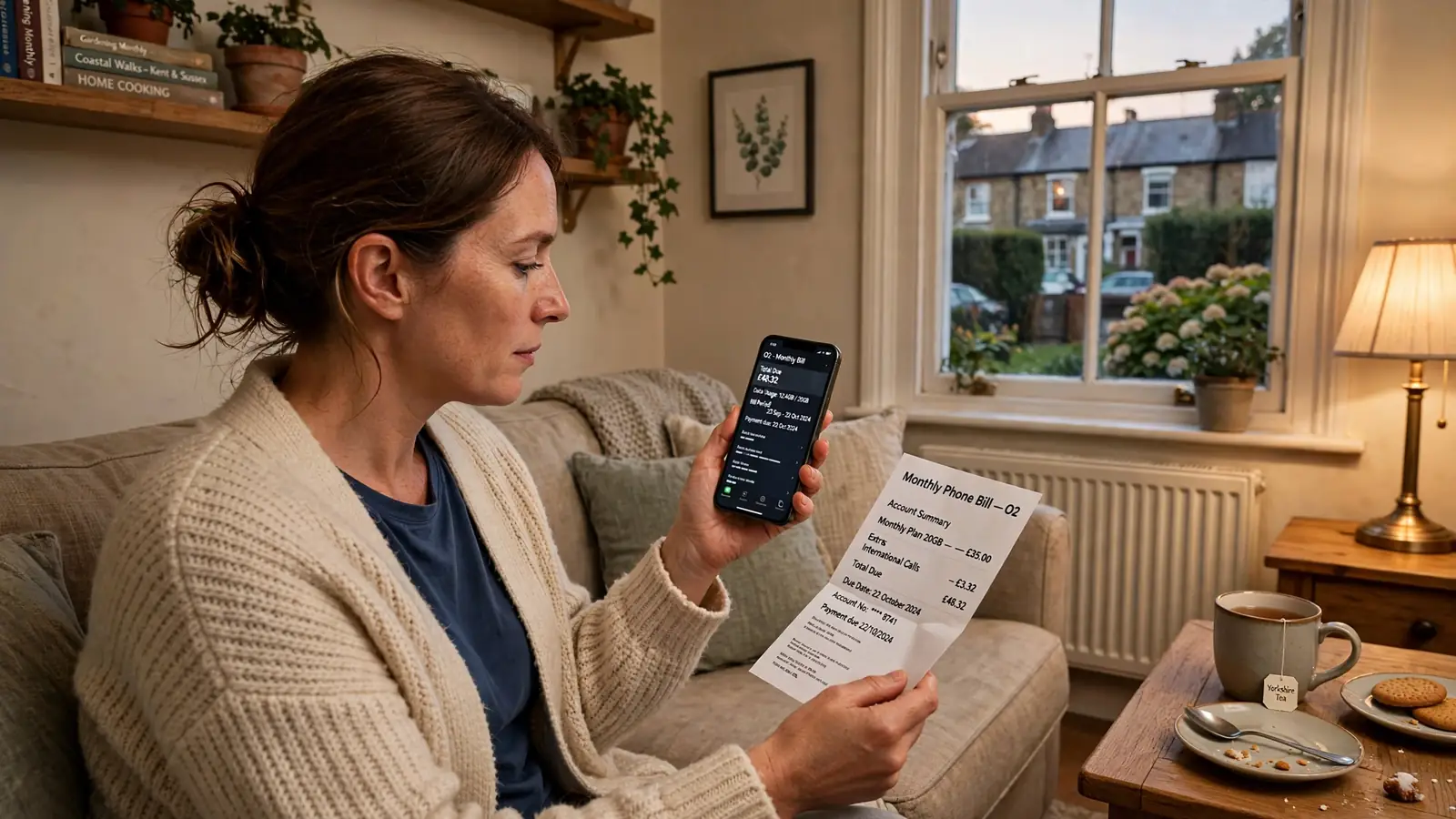
Table of Contents
See how mobile billing, deposit limits, withdrawals and bonus terms affect the money available for casino play.
How Pay-by-Phone Deposits Are Charged
Pay by Phone puts a casino deposit through the mobile network’s billing route. The money does not come from a debit card or a separate casino wallet: the charge is added to the next mobile phone bill, or deducted from existing pay-as-you-go credit. Which route applies depends on how the phone account is set up.
For a customer on a monthly contract, the deposit appears as a charge on the phone bill. It is therefore a real payment obligation even though no card details are entered at the point of deposit. The bill may combine the casino-related charge with other mobile services, so checking the itemised account statement is the way to distinguish it from ordinary network use.
With pay-as-you-go service, the amount comes out of the available phone credit instead. That makes the balance itself the practical source of funds: a deposit reduces the credit that would otherwise be available for calls, messages or data. The casino account receives a deposit, but the payment is recorded through the mobile account. The two balances should not be confused; one is gambling-account funds, the other is phone credit or a phone-bill charge.
This is the essential meaning of mobile casinos accepting phone credit. The phrase describes the route by which the deposit is charged, not a special type of casino balance or a guarantee that every mobile network will support the payment. A phone can be used to access a casino without its phone account being accepted as a funding method. Mobile access and Pay by Phone are separate functions.
The distinction matters when assessing the amount ultimately paid. The deposit amount is the sum credited to the casino account; the amount appearing on a bill or deducted from prepaid credit can include a network surcharge where one applies. A specialist review has reported premium-rate fees of £0.50 to £1.50 for some Pay by Phone transactions. That is a reported range, not a tariff that applies to every operator or network. The network’s own charge information and the payment screen are the relevant places to check the cost before confirming.
Foreign Casinos for UK Players: Licensing and Risks
A phone-bill charge can make a casino payment less visible than a card transaction, but it does not make the expense disappear. Contract customers still have to settle the bill, while pay-as-you-go customers lose credit immediately from the balance available on the phone account. In both cases, the casino deposit remains a real-money payment. Treating it as separate from ordinary spending because it is collected by the network would understate the cost.
There are consequently two amounts worth keeping distinct: the deposit credited to the casino and the total cost recorded by the mobile provider. If no separate fee is applied, they may match. If a surcharge is added, the phone account can be charged more than the casino credits. The exact presentation depends on the provider’s billing arrangement, so the payment details should be read before the transaction is authorised rather than inferred from the deposit amount alone.
Pay by Phone can also be limited by the funds or billing capacity available on the phone account. A pay-as-you-go customer cannot draw on credit that is not present, and a contract customer should not assume a casino payment will be treated as part of an ordinary allowance. The method uses the mobile account as the collection route; it does not convert a phone plan into casino credit or remove the need to account for the expenditure.
A useful record is the casino deposit confirmation alongside the relevant mobile-account entry. If the two amounts differ, the difference should be checked against the provider’s stated fees and the transaction details. That comparison makes it possible to identify whether the casino credited the intended deposit and whether the network added a separate charge. It also avoids relying on memory when the bill arrives later.
For a pay-as-you-go account, the deduction is more immediate: the available credit falls when the phone-credit payment is charged. For a contract account, the cost is collected through the bill instead. Neither arrangement changes the underlying nature of the transaction. In each case, the customer is paying for a casino deposit through the mobile account, and the amount should be counted as spending when it is made.
This page contains affiliate links. If a reader clicks a link and deposits, the publisher may be paid.
Checking the Operator Before Depositing
A mobile casino accepting Pay by Phone is not legitimate merely because its payment page recognises a mobile number. The relevant check is whether the operator holds a current UK licence for serving the British market. Remote gambling businesses must meet that requirement even when the company is based elsewhere; its location does not replace the licence required to offer real-money gambling to customers in Great Britain.
Online Casinos with No Sister Sites in the UK
Online gambling is legal in the UK when it takes place through a licensed and regulated site. The licence is therefore more than a label on a homepage. It identifies the regulatory framework under which the operator is permitted to serve customers, and it distinguishes a licensed casino from a business operating outside the UK system. A UK Gambling Commission licence provides the strongest layer of consumer protection available in this market, although it is not a promise that every payment or account issue will be resolved without dispute.
Find the licence number
The operator’s UKGC licence number can be found at the bottom of its homepage. That is the practical starting point: locate the number on the casino’s own site, then check that the licence is current and belongs to the operator actually named there. The name on the licence and the business presenting the casino should make sense together. A licence number displayed without a clear connection to the operator is not a useful check.
The check matters for a mobile casino pay with phone credit because the payment method does not establish who is receiving the money or which rules apply to the account. A carrier-billed deposit can make the transaction feel like an ordinary mobile purchase; legally, it remains funding for real-money gambling. The operator’s licence, rather than the appearance of the payment screen, determines whether the service is authorised for the British market.
A homepage badge is not the same as verification. A number should be checked against the UKGC register, and the details should correspond to the business operating the casino. If the operator’s identity or licence status cannot be matched, the deposit decision has no sound regulatory basis. This is a basic identity check, not a judgement about the quality of the games or the speed of a mobile site.
What the licence means
The Gambling Act 2005 governs gambling in England, Wales and Scotland. Operators offering real-money gambling to customers in those parts of Great Britain need a UK Gambling Commission licence. The requirement applies to remote operators serving British consumers, whether they are based in the UK or abroad. An overseas address does not create an exemption.
Unlicensed Casinos
Offshore casinos can operate outside the UKGC system and lack a UK licence, meaning they do not provide the consumer protections of the regulated market.
The legal position is not that every site available on a phone is authorised. Offshore casinos can operate outside the UKGC system and lack a UK licence. Their accessibility does not make them part of the regulated market. For a casino pay with phone credit in the UK, the distinction is material: using a familiar payment route does not bring an unlicensed operator within UKGC oversight.
Northern Ireland is not covered by the Gambling Act 2005, so that Act should not be described as governing the whole UK. The broader practical point remains that a legal online casino serving British players must hold the appropriate current UK operating licence. The licence check should be tied to the business and market being served, rather than inferred from branding, a UK-facing website or the availability of a mobile payment option.
Keep the check separate from the payment choice
Phone-credit availability answers a narrow question: whether the casino presents that funding route. It does not verify the operator’s legal status, and it does not increase the protection attached to the account. The sensible order is to establish that the business is licensed before considering any deposit method. Payment convenience is a feature; authorisation is the threshold.
Age verification is also part of the regulated process. UK-licensed operators must verify a customer’s age before allowing funds to be deposited into a gambling account. Online gambling is legal for adults aged 18 and over when the operator holds a UK Gambling Commission licence. A payment method cannot stand in for that check.
The licence does not remove the need to read the operator’s terms or to treat gambling as a financial risk. It does, however, identify whether the casino is operating within the UK framework. That is the point to settle before a mobile casino pay with phone credit is considered: first establish the operator’s identity and current licence, then assess the payment and account terms independently.
Mrmegacasinouk.com is an affiliate site and may receive payment if a reader follows a link and deposits with an operator. That commercial relationship does not change the licence requirement or the check described above. A recommendation is not a substitute for confirming the operator’s current status.
Offshore Casinos for UK Players: Licensing and Risks
Mobile Access: Browser Play and App Performance
A mobile casino does not necessarily require a downloaded app. Most UKGC-licensed casinos provide instant play through a mobile browser, so the games can be opened on a phone without installing a separate application. For someone comparing mobile casinos that accept phone credit, this separates two decisions: how the account is funded and how the casino’s games are delivered to the screen. A payment option does not determine whether play happens in a browser or through an app.
Browser access is the simpler starting point. The casino is opened in the phone’s browser and play begins there; no app installation is needed for the instant-play route. That matters when the aim is to reach the casino without adding another application to the phone. It also means that “mobile casino” does not, by itself, tell anything about the software behind the game screen. Two sites may both open on a phone while responding differently to touch.
An app label is not a reliable description of the technology underneath. Some casino apps use a native wrapper: an installed app shell around the mobile casino experience. Others use a WebView embed, which displays web content inside an app. The difference is relevant to responsiveness, not to the method used to pay. A casino can therefore have a downloadable app without every part of its interface behaving like software built natively for the phone.
A specialist review reported a sharp contrast in one comparison: the spin control in a native wrapper responded at the millisecond of touch, while a WebView embed showed a noticeable half-second delay. Those are observations from that review, not a guaranteed measurement for every casino, device or session. The useful point is narrower: an app icon alone does not establish that the game interface is native or equally immediate. The implementation beneath the icon can matter.
That distinction is most visible in repeated touch interactions. A delayed response can make a control feel less direct, even where the game itself is available and playable. Conversely, a quick response is a matter of interface performance; it says nothing by itself about account terms, game rules or whether a particular payment route is available. Treating these as separate checks avoids giving an app a broader endorsement than its performance supports.
Casino Sites Not Registered with GamStop: UK Guide
For mobile casinos pay with phone credit, the practical comparison is therefore not simply “browser or app”. It is whether the browser provides the required access and whether an app, if offered, delivers a meaningfully responsive interface. Browser instant play is already available at most UKGC-licensed casinos, so downloading an app should not be assumed to be a prerequisite for playing. Nor does a mobile-friendly payment option prove that an app will be faster than the browser version.
A useful assessment focuses on the interaction rather than the marketing label. Does the game open directly in the browser? If an app is offered, is it a native wrapper or a WebView embed? Does the spin control respond promptly when touched? These are distinct observations. The first concerns access, the second concerns how the app is built, and the third concerns the response experienced in use. “App available” answers only the first part of the app question.
The distinction also limits what can be inferred from the available comparison. A reported half-second delay is a specific review observation, not a market-wide benchmark. It should not be converted into a claim that every WebView casino is slow, or that every native wrapper responds at precisely the same speed. Similarly, instant browser play describes availability through a browser; it does not promise that every page or interaction will feel identical on every phone.
For a casino chosen partly because it supports phone-credit deposits, the mobile experience can be judged independently: browser play may remove the need to install an app, while the app’s underlying implementation may affect touch responsiveness. Neither point changes the payment arrangement itself. Keeping those questions separate makes the comparison more precise: access is about where play opens, performance is about how controls react, and funding is a separate account function.
Deposit Minimums, Transaction Caps and the Final Cost
The amount available for a phone-credit deposit is constrained at both ends: the casino sets a minimum, while the operator or payment route may impose a ceiling for each transaction. A specialist review reports that many mobile casino apps set a £5 minimum, with some accepting deposits from £2. The same kind of review places the per-transaction Pay by Phone cap at £30 for most operators. These are reported terms, not fixed market-wide rules; the cashier’s stated limits determine what applies to a particular account.
International Casinos for UK Players: Risks and Rules
That leaves a narrow working range at operators using those thresholds. A £2 minimum is not universal, and a £30 cap should not be treated as a promise that every casino will accept that amount. The deposit screen is the relevant check before confirming a payment: it shows whether the chosen amount falls within that operator’s permitted range. A payment option appearing in an app does not, by itself, establish that every amount is available.
A specialist review also describes the entered deposit amount as generally falling between £5 and £30. That range aligns with the reported minimum and transaction ceiling, but it does not override an individual casino’s terms. Where the minimum is £5, a smaller amount will not meet the entry condition; where the operator applies a lower maximum, the larger amount will be rejected or unavailable. The practical figure is therefore the amount the cashier accepts, not the highest number quoted in a general review.
Calculating the amount spent
The deposit amount is not always the full cost of the transaction. A specialist review reports that some mobile networks apply a premium-rate charge of £0.50 to £1.50 to Pay by Phone transactions. Whether that charge applies depends on the network and the transaction terms, so it should be checked rather than assumed.
The arithmetic is straightforward when a network fee is charged separately. A £5 deposit with a reported fee of £0.50 to £1.50 produces a total outlay of £5.50 to £6.50. At a £30 deposit, the corresponding total is £30.50 to £31.50. The casino deposit remains the amount selected; the extra charge is a separate cost, not additional casino balance. If no network fee applies, those totals do not apply either.
This distinction matters most near the transaction cap. A £30 casino deposit may require more than £30 in total spending if the network adds its fee. The cap refers to the deposit amount reported by the casino-payment review, not necessarily the full amount charged across the phone account or prepaid balance. The cashier and network terms need to be considered together before confirming the amount.
For a smaller deposit, the fee can form a more noticeable share of the total outlay. With the reported fee range, adding £0.50 to a £5 deposit increases the cash cost by that amount; adding £1.50 increases it further. The deposit balance does not rise to compensate. A low minimum therefore reduces the initial amount placed in the casino account, but it does not guarantee a proportionately low total cost.
Calculating Total Cost
Step 1: Select Deposit
Choose a deposit amount, for example, £5.
Step 2: Check Network Fee
Identify if the mobile network applies a premium-rate charge, such as £0.50 to £1.50.
Step 3: Sum the Total
Add the fee to the deposit for a total outlay of £5.50 to £6.50.
What the limits mean in practice
The figures describe separate checks, not a single guaranteed offer: the app’s minimum, the operator’s maximum per transaction, and any charge applied by the mobile network. Before paying, the amount selected should fit the casino’s displayed range, and the total cost should include any network fee shown for that payment. If the minimum and maximum differ from the reported figures, the terms displayed at the point of deposit take precedence.
A transaction cap also limits what can be put through in one payment. It does not establish a casino-wide deposit allowance or indicate that a larger amount can be funded in another way. For Pay by Phone, the useful comparison is the accepted deposit amount against the full charge attached to that specific transaction. That is the final cost to assess—not the deposit figure in isolation.
Using Phone Credit Alongside Other Mobile Payment Methods
Pay by Phone is one way to fund a mobile casino account, but it is not the only route that can work on a handset. Apple Pay, debit cards, PayPal and Open Banking may also appear in a casino’s cashier. Availability depends on the operator, so the payment list shown in the account is more useful than assuming every method is supported.
The practical difference is what each route asks the customer to do. Pay by Phone connects the deposit to a mobile account or prepaid balance. Apple Pay can reduce the steps at checkout: a specialist review reported instant deposits in the apps it tested, completed with two taps. That is a report of tested apps, not a promise about every casino or device.
Debit cards can also provide quick funding. A specialist review described deposits as generally instant, while noting that some banks flag casino transactions. A declined payment therefore does not necessarily indicate a problem with the casino account; the bank’s treatment of the transaction may be relevant. Credit cards are not an alternative for gambling deposits in Britain: licensed operators cannot accept them, including when the payment is routed through a money service business.
UK Online Casino Payouts: Understanding RTP and Returns
Open Banking shifts the process towards bank authentication rather than card entry. A specialist review reported that identity verification through this route could take about two seconds without uploading documents. That is a specific reported result, not a fixed service time. The operator may still require separate checks, and the available process can vary between casinos.
PayPal is another mobile-compatible option, but the account currency matters. A specialist review noted that currency-conversion fees may apply when gambling in a currency other than pounds sterling. Where both the casino balance and payment are in pounds, that particular conversion issue does not arise; any other charges depend on the applicable account terms.
The comparison is therefore not simply a choice between fast and slow. Apple Pay and debit cards have been reported as quick deposit routes, while Open Banking may combine payment with identity verification. Pay by Phone uses the mobile account or prepaid credit instead. Each method has a different point of friction: bank authorisation, payment authentication, currency conversion, or reliance on the phone account. The cashier’s stated terms should be checked before selecting one, especially where a payment method is unavailable or a transaction is declined.
For slots played on a phone, the funding method does not determine which games are available or how the casino runs them. It determines how the account is funded. A payment route that is convenient at deposit can still have a different cost or verification step, so the relevant comparison is the actual amount charged, the confirmation shown at checkout and any conditions attached to that method.
Top online casinos in the UK
- NightWinBonus: £900 + 400 free spins · Payout speed: 1-3 business days
- SpinFormulaBonus: 550% Up To £15,000 + 550 FS · Payout speed: 1-3 business days
- ZombillionBonus: Welcome Pack 250% up to £4000 + 200 FS · Payout speed: 1-3 business days
- JetsetspinsBonus: 200% Bonus + 100 Free Spins + Free Royal Wheel · Payout speed: 1-3 business days
- ChanzeBonus: Slots Welcome Bonus #1 200% up to €500 · Payout speed: 1-3 business days
- EvoSpinBonus: 125% up to €2500 + 125 Free Spins · Payout speed: 1-3 business days
Phone-Credit Funding and Slot-Play Limits
A Pay by Phone deposit can place a firm ceiling on the balance available for slot play. A specialist review describes a £30 per-transaction cap as applying at most operators it examined; that is a reported market finding, not a limit that can be assumed for every mobile casino. The amount accepted by a particular operator determines the starting balance, while British slot rules determine the maximum stake for each game cycle. These are separate constraints.
Jackpot Mobile Casinos in the UK: Games and Rules
A deposit cap is not a permitted stake. A £30 payment does not allow the full amount to be wagered on one spin. For customers aged 25 and over, the maximum online slot stake is £5 per game cycle. For customers aged 18 to 24, the limit is £2 per cycle. The lower limit for younger adults means the same deposited balance is divided into smaller permitted stakes; it does not increase the deposit ceiling or change the money credited.
The practical calculation is therefore straightforward: the payment method restricts how much can enter in a transaction, and the stake rule restricts how much can be committed in an individual slot cycle. Neither figure establishes how long a balance will last. That depends on the stakes selected and the outcomes of play, which cannot be predicted from the deposit amount.
British online slots also cannot offer autoplay, and each spin must last at least 2.5 seconds. A phone-credit balance therefore cannot be turned into a faster sequence of automated spins. The rules apply to slot play, not just to customers who funded their account by phone credit.
For anyone comparing phone-credit slot sites in the UK, the useful distinction is between the payment limit and the play limit. The first is set by the operator’s Pay by Phone terms; the second is set by the applicable British slot-stake rules. A small deposit may still be spent across multiple game cycles, but the balance alone says nothing reliable about the number of cycles or the eventual result.
What Happens When a Phone-Credit Deposit Is Withdrawn
A deposit made through Pay by Phone does not mean that winnings can be sent back to the mobile account as a reversal. Deposits and withdrawals are separate stages, and the method used to fund the account is generally the method the casino requires for a withdrawal. That matters because phone credit is a funding route, not a cash-out destination.
Withdrawal Routes
Phone credit is a funding route, not a cash-out destination; winnings cannot be sent back to the mobile account as a reversal.
For a mobile casino account funded with phone credit, the withdrawal process therefore depends on the operator’s payment rules. The casino may require the withdrawal to use the same method as the deposit; where that method cannot handle payouts, its stated procedure determines the route. The available withdrawal options and their terms need to be considered before treating a phone-credit deposit as a convenient two-way payment method.
This distinction also affects expectations about timing. A specialist review describes under 24 hours as a realistic benchmark for e-wallet withdrawals at UK-licensed operators. That is a reference point for an e-wallet route, not a promised completion time for every account or a timeline for phone-credit withdrawals. A withdrawal may follow a different process if the deposit method is not available for receiving funds.
The practical calculation is straightforward: the amount deposited by phone credit does not establish how winnings will be paid, or how quickly they will arrive. Those depend on the operator’s withdrawal rules and the route available for the account. Checking the cashier’s withdrawal terms before depositing makes the distinction visible while the payment choice can still be changed.
For someone comparing mobile payment methods, the relevant question is not only whether a deposit can be made from a phone. It is whether the same route can be used when money leaves the casino account, and what alternative process applies if it cannot. A payment method that works only at the deposit stage should be assessed as funding access, not as a complete deposit-and-withdrawal solution.
Pay-by-Phone Deposits: Withdrawal and Complaint Safeguards
A Pay by Phone deposit does not remove the protections that apply to a payout from a UK-licensed mobile casino. If a withdrawal is pending, the operator cannot simply return the funds to the account balance and make them available for further play. Once requested, a withdrawal must not be reversed unless the customer actively agrees to that reversal. Silence or an operator’s preference to keep the balance available is not consent.
Non-GamStop European Casinos: UK Guide
If a legitimate payout is delayed or disputed, the first step is the casino’s own complaints process. The complaint should state the withdrawal at issue, when it was requested and what resolution is sought. Keeping copies of relevant account messages and payment records makes the dispute easier to describe precisely. A casino’s response should address the specific payout, rather than treating a requested withdrawal as an ordinary deposit or playable balance.
If the internal complaint does not resolve the matter, escalation is available through the operator’s approved alternative dispute resolution provider. A specialist compliance review reports that, since October 2023, UK-licensed operators have been required to belong to an approved ADR provider. The casino should identify the relevant provider and explain how to refer an unresolved complaint. ADR is the next route after the operator’s process has failed; it is not a reason to accept an unexplained cancellation or reversal.
The practical test is whether the withdrawal was legitimate and whether the customer actually authorised its return. If the answer to the second point is no, the operator should not reverse it. If the dispute remains unresolved internally, the ADR route provides an external escalation point. These safeguards apply to the operator’s handling of the payout; using phone credit to fund the account does not itself change the complaint route.
No-Deposit Offers and the Cost of Bonus Terms
A no-deposit offer and a Pay by Phone deposit are separate things. A no-deposit promotion does not require a payment to activate it; adding phone credit to a casino account is a funding transaction. Making that deposit does not turn a deposit offer into a no-deposit one, and a no-deposit offer does not mean phone-credit funding is available or required.
The headline value is not the amount that can necessarily be withdrawn. Wagering requirements determine how much qualifying play must be completed before bonus funds or related winnings become withdrawable. A specialist review describes requirements in the 35x to 40x range as standard. Applied to a bonus, that multiple can make the required turnover substantially larger than the bonus itself. The exact calculation depends on the offer’s stated terms.
A separate cap may limit the amount that can be cashed out from bonus play. A specialist review reports caps of £100 to £200 on many bonuses; the limit for an individual promotion must be checked in its terms. If eligible winnings exceed that cap, the excess may not be payable. The bonus figure alone therefore does not establish the final cash value.
The relevant comparison is between the amount potentially withdrawable and the conditions attached: the wagering multiple and any maximum cashout. A no-deposit promotion can still carry both. Phone credit changes how a later deposit is funded, not the conditions that govern a bonus. Where the promotion requires a deposit, it is not no-deposit; where it does not, a phone-credit payment is not part of the qualifying offer.
Stacked Bonuses, Deposit Limits and the Net Amount at Risk
A bonus can change the cashout calculation without changing the amount charged for a Pay by Phone deposit. If a mobile casino permits more than one promotion to be active, each offer’s terms need to be checked for their combined effect; acceptance should not be treated as extra cash available to withdraw.
A specialist review identifies four conditions that can alter a bonus withdrawal: wagering requirements, maximum bet limits, game weighting and a maximum cashout cap. Together, these determine how much play may be required, which bets or games count, and whether the resulting balance is restricted. A displayed bonus balance is therefore not the same as withdrawable money. The useful figure is the cash remaining after applicable conditions have been met and any cap has been applied.
For a deposit with phone credit at a casino, the amount at risk is the deposited value plus any further funds committed while pursuing a promotion. A bonus does not reduce that exposure simply because it increases the account balance on screen. Where stacked offers are available, the terms should be assessed as one combined arrangement before another deposit is made.
UKGC-licensed operators must provide account-level deposit limits. These can be set for daily, weekly or monthly periods in account settings, giving a way to restrict future funding. The limit is a control on deposits, not a calculation of bonus value or a guarantee that funds already deposited will be recovered. Setting it with the intended net exposure in mind keeps the funding decision separate from promotional presentation.
Mrmegacasinouk.com may receive a commission if a reader clicks an affiliate link and deposits.
How long should a mobile casino withdrawal take in 2026?
For UK-licensed casinos, e-wallet withdrawals should realistically arrive within 24 hours; the fastest observed PayPal payout took 2 hours. Bank transfers typically take 3–5 business days, while debit card withdrawals take 1–3 business days.
Are there any fees for using phone credit?
Some mobile networks add a premium-rate fee of around £0.50 to £1.50 per transaction. Check the payment screen and your network’s charge information before confirming.
How fast are withdrawals on these apps?
For UK-licensed operators, e-wallet withdrawals are realistically under 24 hours; the fastest observed PayPal payout took 2 hours. Bank transfers typically take 3–5 business days, and debit card withdrawals take 1–3 business days.
What does wagering on a welcome offer actually mean?
Wagering means placing bets to meet the offer’s turnover requirement before bonus winnings can be withdrawn. A typical requirement is 35x to 40x the bonus amount, and the offer may also have a deadline, maximum bet or cashout limit.