
UK Mobile Top-Up Casinos: Phone-Bill Deposits
 Available in GB
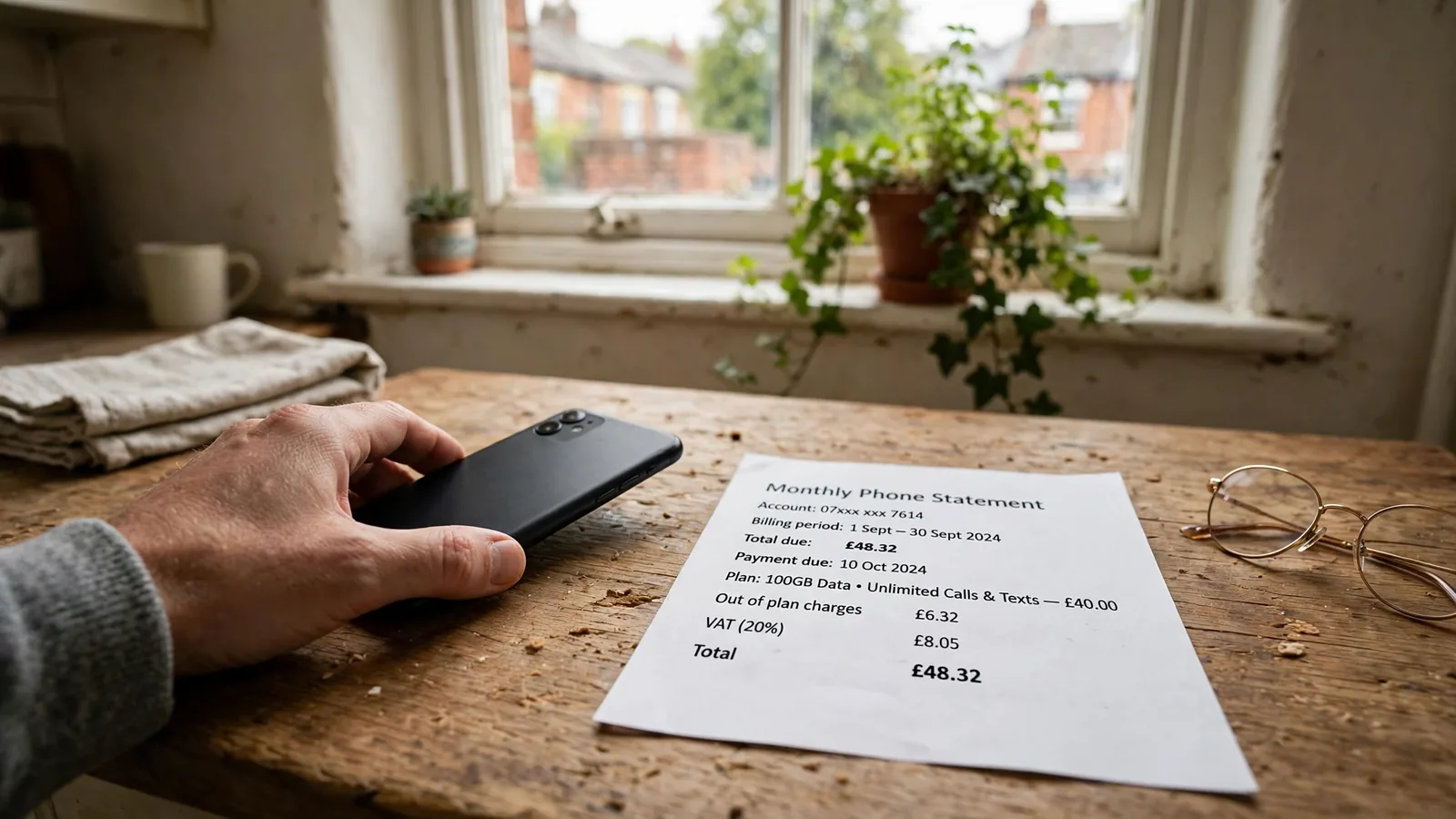
Table of Contents
Payforit deposits come from a later contract bill or existing prepaid credit, changing when the phone-account cost is felt.
Phone-Bill Deposits: What the Charge Actually Covers
A Payforit casino deposit takes its value from the mobile account rather than directly from a bank account. With a monthly contract, the deposit is added to a future phone bill. With Pay as You Go, it is deducted from prepaid phone credit. The payment source therefore depends on the phone plan: one route increases the amount due on a later bill; the other reduces credit already held on the handset account.
That distinction matters when measuring the cost of a mobile casino top-up. A deposit is money transferred to the casino account, but its funding source is the phone account. On a contract plan, the effect is a higher bill to settle later. On a prepaid plan, the effect is less phone credit available for other use. Neither description changes the deposit amount; they describe where that amount is taken from.
For someone looking to top up a casino by phone bill, the amount credited to the casino should be considered alongside the resulting phone-account charge. A monthly bill can make the cost less immediate because payment is collected later. Pay as You Go makes the reduction visible in the remaining credit instead. The timing differs, but the deposit still represents money committed to gambling, not an extra allowance supplied by the network.
A specialist review gives a Payforit deposit range of £3–5 at the lower end and £30 at the upper end. That is a reported range, not a reliable promise for every cashier. The operator’s displayed minimum and maximum determine what can actually be deposited on a particular account. A cashier may set a different minimum, and the available amount should be checked before the transaction is confirmed. Where the minimum exceeds the intended deposit, the payment method may not suit that budget.
The same distinction applies to slots. A mobile slots top-up funded from Pay as You Go credit reduces the prepaid balance; one made on a contract phone is carried into the later bill. The amount deposited is the relevant casino balance change, while the phone plan determines how that amount is collected. A phone-bill deposit is not cost-free merely because it does not use a debit card at checkout. Its cost is the sum charged through the phone account.
EcoPayz casino sites in the UK: check Payz
For budgeting, the useful figure is the final amount that will be debited or billed, not just the number shown as a casino deposit. The current cashier should be checked for the minimum deposit, maximum transaction value and any fee before proceeding. If the stated deposit and the amount charged are not clear, the total cost is not yet established. A low minimum is not a saving if a separate charge changes the amount payable; equally, no extra charge should be assumed without confirmation.
This is a practical distinction between a casino top-up by phone and an ordinary bank-funded payment. A contract customer should account for the deposit in the next phone bill. A Pay as You Go customer should account for it against existing credit. In either case, the money has been spent once it is credited for casino use, even if the contract charge is collected later. Treating the later bill as separate from the gambling spend would understate the cost.
The phrase “top up by phone” can make the payment sound like a balance transfer within the handset. The relevant balances are separate: phone credit or a phone bill on one side, and the casino account on the other. Payforit links the deposit to the phone account as its funding route. The amount credited to the casino does not become mobile credit, and the remaining phone balance is not a measure of the casino funds available.
Before choosing a phone-bill deposit, the amount shown in the cashier needs to be matched against the phone plan’s available funds and the player’s intended spend. A prepaid account must have enough credit for the amount being charged. A contract account carries the cost forward to the bill rather than removing prepaid funds. The distinction is simple, but it changes when the spending becomes visible: immediately in the Pay as You Go balance, or later in the contract bill.
A Payforit deposit is funded either by adding the amount to a future monthly phone bill or by deducting it from existing prepaid Pay as You Go credit.
Top online casinos in the UK
- NightWinBonus: £900 + 400 free spins · Payout speed: 1-3 business days
- SpinFormulaBonus: 550% Up To £15,000 + 550 FS · Payout speed: 1-3 business days
- ZombillionBonus: Welcome Pack 250% up to £4000 + 200 FS · Payout speed: 1-3 business days
- JetsetspinsBonus: 200% Bonus + 100 Free Spins + Free Royal Wheel · Payout speed: 1-3 business days
- ChanzeBonus: Slots Welcome Bonus #1 200% up to €500 · Payout speed: 1-3 business days
- EvoSpinBonus: 125% up to €2500 + 125 Free Spins · Payout speed: 1-3 business days
Using a Mobile Payment at an Online Casino
A mobile top-up at an online casino is a deposit route linked to a mobile phone, not a separate kind of casino account. Payforit is generally aimed at players using a mobile device. That makes it relevant to someone funding play from a phone, but it does not make the method a universal option across casino websites or apps. The cashier determines whether it can be used for a particular account.
The practical boundary is therefore access, not the games themselves. A casino may offer slots and other online games on mobile while presenting a different set of payment choices to a player using a desktop computer. Conversely, a mobile-friendly site does not necessarily accept Payforit. Device compatibility and payment acceptance are separate conditions; the presence of a mobile version says nothing conclusive about the cashier.
This matters when the phrase “top up by mobile” is used loosely. It can mean adding funds while using a phone, or it can mean charging a deposit through a phone-linked payment service. Those are not interchangeable. A debit card or an e-wallet can be used on a phone if the casino accepts it, without being a pay-by-mobile service. Payforit is the specific option in this context, and its mobile focus should not be taken as proof that every casino offers it.
Payment choices need to be checked at the point where the account is funded. An operator’s cashier is the relevant record of the methods currently available to that player. A method mentioned in a general description, an old review or a list of casino features may not appear in the live cashier. Availability can also differ between operators, so there is no single payment menu that applies to every UK casino.
A specialist review identifies Boku, e-wallets and Paysafecard as alternatives to Payforit. These are alternatives in the sense that they may provide other ways to fund an account; they are not guaranteed substitutes at every casino. Their presence should be confirmed in the operator’s current cashier before a deposit is planned. The same check applies to familiar card options, including Visa and Mastercard, and to PayPal: a payment brand being known in the UK does not establish that a particular casino accepts it.
Casinos That Accept Ukash in the UK: What to Check
That distinction is useful for a player who wants to use a phone but is not committed to phone billing. If Payforit is absent, the account may still show other methods that can be selected from a mobile browser or app. The reverse is also possible: Payforit may be listed, while a preferred alternative is not. The working choice is the overlap between the player’s intended method and the live options for that account, not the widest list found in general casino material.
The phrase “online casino top-up” can also obscure which part of the process is being considered. It may describe a deposit made from a phone, a payment taken through a mobile-linked service, or simply an account deposit completed on a small screen. Only the second meaning is specifically pay-by-mobile. Separating those meanings avoids treating every phone-based payment as mobile billing and avoids assuming that a mobile site must have a phone-charge option.
Payforit
A mobile-focused payment option that links deposits directly to a phone account.
Boku
A phone-linked service that may include network processing fees and requires SMS confirmation.
E-wallets & Paysafecard
Alternative funding routes that can be accessed via mobile browsers or apps.
For a UK-facing real-money casino, payment selection sits within the wider account conditions. Operators serving Great Britain must hold the relevant UK Gambling Commission licence, and age must be verified before deposits are allowed. New customers must be invited to consider a financial limit before their first deposit; the account’s limit controls must remain available afterwards. These are account safeguards, not features of Payforit, and they apply regardless of whether the deposit is made by phone, card or another listed method.
A sensible payment comparison therefore starts with the actual cashier, then distinguishes the device used from the source of payment. Payforit is a mobile-focused option where offered. Boku, e-wallets and Paysafecard may appear as other choices, while card or PayPal availability depends on the operator’s current menu. None should be assumed from the casino’s mobile presentation alone. The cashier is the point at which a general payment description becomes a usable option for a specific account.
The £30 Transaction Cap and Current Payforit Availability
Payforit has a firm transaction ceiling: a single deposit cannot exceed £30. A specialist review of pay-by-phone terms attributes that limit to the Phone-paid Services Authority. It is a cap on each transaction, not a suggested deposit target or a figure that a casino can raise at its discretion. A cashier may set a lower maximum, but it cannot make a Payforit transaction above the stated ceiling permissible.
That distinction matters when comparing payment options. The amount accepted by a particular casino can be below the Payforit limit, because the operator’s own cashier terms also apply. The practical maximum is therefore the lower of the method’s cap and the maximum displayed by the casino. Where the cashier presents a smaller limit, the £30 ceiling does not override it. Where an amount above £30 is needed, Payforit cannot process it as one transaction; attempting to divide a larger deposit into multiple transactions to get around the cap would defeat the limit and is not an appropriate workaround.
Casinos That Accept Upaycard in the UK: What to Check
The same number should not be treated as a promise that every Payforit cashier will accept a £30 deposit. A maximum is not a minimum, and it does not establish the amount permitted for a particular account. The current cashier is the point at which the operator’s available deposit range and any account-level financial controls can be checked. If the displayed terms do not permit the intended amount, the displayed terms govern that deposit.
Availability is a separate question from the cap. Payforit may be known as a mobile top-up option, but that does not mean it appears at every UK casino, on every device, or for every account. Its presence must be confirmed in the live cashier of a casino holding a UKGC licence. A payment method described in an older review or general payment guide is not evidence that it remains selectable now. Payment menus can change, so the relevant evidence is the method actually shown by the operator before the deposit is made.
Specialist casino reviews have reported Payforit as available at some operators, including Kwiff, NetBet, JackpotJoy and Virgin Games. That is a lead for checking, not a permanent availability guarantee. The cashier should be opened for the specific account and checked directly; if Payforit is absent there, a past listing does not make it available. The operator’s current terms should also be read alongside the payment options, since availability alone does not establish the applicable minimum, maximum, fees or account controls.
Payforit has a firm transaction ceiling of £30; any amount above this cannot be processed as a single transaction.
For a mobile top-up casino in the UK, the useful comparison is therefore not a broad claim that a brand “supports” Payforit. It is whether a UK-licensed operator currently presents the method in its cashier and whether the amount permitted there fits the intended deposit. Both conditions must be met. A method can be technically familiar yet irrelevant to an account if it is not offered at checkout, while a visible option can still have a lower operator-set maximum than the method’s overall ceiling.
The £30 limit also rules out treating Payforit as a route for a large single deposit. Its ceiling is fixed at transaction level, and no wording such as “mobile top-up” changes that calculation. The operator may display its own lower threshold; the applicable amount is whichever restriction is tighter. The cashier’s figures should be checked before confirming a deposit rather than inferred from a general description of mobile payments.
For anyone comparing mobile casino top-up options in 2026, “current” needs to mean current at the point of use. A review can help identify operators to investigate, but it cannot substitute for the live cashier. The check is straightforward in principle: confirm that the casino holds a UKGC licence, verify that Payforit is actually listed for the account, and read the cashier’s stated transaction limits and terms. If any of those details differ from a general description, the live operator information takes precedence.
The resulting position is narrow but clear. Payforit’s transaction ceiling is £30, while availability is operator-specific and must be verified in the casino’s current cashier. Neither fact establishes that every UK-licensed casino accepts the method, nor that every account can deposit the ceiling amount. The cap is the outer boundary; the cashier determines whether Payforit is available and what lower restrictions apply.
Casinos That Accept USDC in the UK: Payment Guide
The SMS Confirmation Step
A Payforit deposit is completed through a short sequence in the casino cashier. The payment method is selected first; a mobile number is entered next; then a confirmation code sent by SMS is submitted to approve the transaction. The code is the final confirmation step, not an optional message to read and ignore.
The cashier begins the process. After Payforit is selected from the payment options, the relevant field asks for a mobile number. That number identifies where the confirmation message should be sent. The entry therefore needs to correspond to the phone being used for the transaction: a code delivered to a different handset cannot be entered from the intended device unless it is accessible there.
Once the number has been entered, the casino payment flow sends an SMS containing a confirmation code. The message supplies the information needed for the next step. The code is then entered into the cashier and submitted. In practical terms, selecting Payforit and entering a number start the request; submitting the code confirms it.
This is the point at which a mobile casino top-up by SMS differs from simply choosing a payment option. Until the code is provided and submitted, the process has not reached its confirmation stage. The method is not completed merely because a number was typed into a form or because a text arrived. The code links the request on screen with the confirmation sent to the phone.
Payforit Deposit Process
Step 1: Selection
Select Payforit from the payment options in the casino cashier.
Step 2: Mobile Entry
Enter the mobile number associated with the account to be charged.
Step 3: SMS Confirmation
Receive the confirmation code via SMS and submit it into the cashier to authorise the transaction.
The sequence is straightforward, but each entry matters. The selected option must be Payforit, the mobile number must be the one intended for the transaction, and the code must be entered in the confirmation field before submission. A mismatch at any of those steps leaves the confirmation unfinished. The cashier’s displayed instructions govern the exact fields and buttons; the essential action remains the same: select Payforit, provide the number, receive the SMS and submit its code.
For someone looking to top up a casino account by mobile, the SMS stage is an approval step rather than a separate payment choice. The code does not replace the earlier selection or the number entry. It completes the chain by confirming the transaction through the phone. That distinction is useful when reviewing the screen: the first part prepares the request, while the final code submission authorises it.
The code should be treated as transaction-specific information. Its purpose in this flow is to confirm the Payforit request being made in the cashier. It is not a general account detail and does not serve as a substitute for the casino’s normal account access. Keeping the message and the open cashier flow aligned reduces confusion between a deposit in progress and a completed confirmation.
The same sequence applies whether the wording on the cashier describes the action as paying by phone or making a mobile deposit. Labels can differ, but the operational steps do not: choose Payforit, enter the mobile number, receive the confirmation code by text and submit it. No separate SMS-only route is created by searching for a different phrase; the relevant process is the one presented inside the cashier.
TRON (TRX) Casino Comparison for the UK
Before the first deposit, new remote customers must be prompted to consider setting a financial limit. Account-level limit controls must also remain available afterwards, so the payment confirmation does not replace the customer’s ability to manage account limits. These controls are separate from the SMS code: one concerns account spending settings, while the other confirms the Payforit transaction.
A casino top-up by SMS is therefore complete only after the code has been entered and submitted in the payment flow. The number and code are not incidental details; together they form the confirmation sequence that moves the request past the pending stage.
Mobile Deposits Versus Debit Cards for Slots
For funding slot play, the main difference is the amount of payment access each method provides. Debit cards are described in specialist reviews as free to use for casino deposits and accepted at more operators than Payforit. That is a comparison, not a promise about every cashier: the available methods and any charges must be checked against the casino’s live payment page.
Payforit has a narrower role. It is a pay-by-mobile option, but its transaction value is capped, so it cannot match a debit card for every deposit amount. The cap matters when the intended deposit exceeds what a single Payforit transaction allows. It does not mean a casino will offer the method at all; support depends on the individual cashier. A mobile top-up casino therefore needs to be assessed on the payment options actually shown during account funding, not on the label used in a general description.
Do
- Check the live cashier for current available methods.
- Verify the operator’s minimum and maximum limits.
Don’t
- Assume a method is available based on old reviews.
- Use credit cards for gambling deposits in Great Britain.
A debit card is the more practical choice where broad acceptance and a deposit without a payment-method fee are priorities. A specialist review characterises debit-card deposits as free and more widely accepted than Payforit, but the casino’s own terms remain decisive for the specific account. The payment screen should be checked for any stated charge, minimum, maximum or account control before money is sent. These terms can differ between operators and methods.
Credit cards are not an alternative route for gambling deposits in Great Britain. UKGC-licensed remote operators cannot take credit-card funds for gambling, including when the payment is channelled through a money-service business. Routing the payment through another service does not change the underlying source of funds. This restriction concerns credit cards; it should not be confused with the use of a debit card, which draws on available bank funds rather than extending credit.
For UK mobile top-up casinos, the practical choice is therefore conditional. Payforit suits a deposit that falls within its transaction ceiling and where the casino lists it as available. A debit card is the broader option when the cashier accepts it and the deposit terms fit the account. Neither method should be treated as available by default, and neither overrides the casino’s own financial-limit controls.
Before a first deposit, a new remote customer must be prompted to consider setting a financial limit. That control should remain accessible at account level afterwards. The limit is separate from a payment method’s transaction ceiling: one governs how much can be deposited through a particular route, while the other is an account-level control over gambling funds. For slots mobile top-up payments, checking both avoids treating a small payment cap as a substitute for a wider spending limit.
Paying for Slot Play from a Phone
A Payforit deposit draws on the mobile account attached to the phone. The source depends on the tariff: a monthly contract places the charge on a future phone bill, while Pay as You Go takes it from prepaid credit already on the account. The casino receives a deposit; the phone account determines how that amount is funded.
With a contract, the deposit becomes part of the next bill rather than an immediate deduction from a bank balance. It may therefore sit alongside other charges on the account. The timing of payment to the network is separate from the casino deposit itself: the charge is recorded against the phone service and settled through the bill.
With Pay as You Go, there is no later monthly invoice for the deposit. The amount comes out of the available prepaid balance. If that balance is insufficient, the account cannot cover the charge from its existing credit. This makes the distinction practical: one route adds a cost to a future bill; the other reduces credit already paid for.
For anyone considering a mobile top-up for slots, the useful comparison is with the phone account’s own spending position. A contract user is adding a charge to an eventual bill, while a prepaid user is using part of a finite balance. Neither arrangement makes the deposit cost-free; they change when and where the money is taken.
That difference can also affect budgeting. A bill payer may not see the amount leave a bank account at the moment of play, but it remains payable as part of the phone account. A Pay as You Go user sees the available credit fall instead. Treating either as separate from ordinary spending would obscure the actual cost.
Budgeting by Phone Plan
Contract users add charges to a future bill, meaning the cost is not immediate. Pay as You Go users see an immediate reduction in their prepaid credit balance.
Before a first deposit, the casino must prompt a new remote customer to consider setting a financial limit. Account-level limit controls must remain accessible afterwards. That control concerns gambling spend, not the mobile tariff: a phone bill or prepaid balance describes the payment source, while the casino limit sets a boundary on account activity.
The relevant check is therefore not simply whether a phone can fund play. It is whether the resulting charge belongs on a later bill or comes from credit already held, and whether that fits the account’s budget. A mobile top-up changes the payment route, not the underlying fact that casino funds are being spent.
Boku and the Cost of Mobile Billing
Boku can fund casino play through a charge linked to a mobile account, but the amount that reaches the casino is not necessarily the only cost to account for. A specialist review reports a standard transaction ceiling of £30. That figure is a limit on an individual deposit, not a statement that every casino offers Boku or accepts deposits up to that amount. The live cashier determines whether Boku is available and what transaction values it permits.
The payment also depends on the phone account having enough available credit to cover the deposit and any network processing fee. A specialist review notes that a network may apply such a fee, with the charge varying according to the network and tariff. If the available credit covers the requested deposit but not the additional fee, the transaction may fail. The practical cost is therefore the deposit plus any applicable network charge, rather than the deposit figure alone.
Before confirming a mobile payment for slots, the cashier should be checked for Boku’s listed minimum and maximum, and for any fee shown at checkout. The network’s tariff is a separate part of the calculation: a casino’s displayed deposit amount does not establish what the mobile provider will charge. Where the fee is not made clear, the total debit cannot be calculated reliably from the deposit amount alone.
Boku also requires SMS confirmation before funds move. That confirmation is part of authorising the transaction; it does not remove the phone-credit requirement or increase the permitted transaction ceiling. A successful confirmation cannot compensate for insufficient credit or an unsupported payment option.
A casino account’s financial-limit controls are separate from Boku’s payment ceiling. New remote customers must be prompted to consider setting a financial limit before their first deposit, and account-level controls must remain accessible afterwards. The payment method sets a constraint on how a deposit is funded; it is not a substitute for deciding how much may be spent overall.
A Mobile Top-Up Is a Deposit, Not a Withdrawal Route
A mobile top-up for slot play moves money into a casino account; it does not establish how winnings can be paid out. The two transactions have different purposes, and the deposit method should not be treated as a reusable route in both directions.
With Boku, the deposit is not completed merely by starting the payment. The transaction must be confirmed by SMS before the funds move. Until that confirmation takes place, the top-up has not been authorised through this process. This confirmation applies to the deposit; it says nothing about the route available when money later leaves the casino account.
Payforit has a clear limit of function: it can fund a casino account, but it cannot be used to withdraw casino funds. A balance created through a Payforit deposit therefore does not mean that the same phone-payment route can return winnings. The withdrawal arrangement has to be considered separately.
That distinction matters when comparing ways to top up slots by mobile. A deposit option describes how funds enter play, not the full lifecycle of the balance. Treating it as a two-way payment method would confuse the point at which money is added with the later payout process.
No Withdrawal Route
Payforit is for deposits only and cannot be used to withdraw winnings back to a phone bill or prepaid balance.
The practical accounting is simple: Boku requires SMS confirmation before a deposit proceeds; Payforit is not a cash-out method. Any winnings remain in the casino account until a separate withdrawal route is available and the operator’s applicable checks and terms have been satisfied.
Assessing a Mobile Top-Up Casino on Its Terms
A useful comparison of casinos accepting mobile top-ups is based on the terms shown in each live cashier, not a ranking detached from the account and payment method. A specialist review recommends checking four items before depositing: the minimum deposit, the maximum transaction value, any fee, and the financial-limit controls available on the account. These conditions can differ between operators and may change, so a review should not replace the current cashier.
The minimum determines whether the intended deposit can be made at all. The maximum sets the amount the cashier will accept in one transaction; a stated payment-method ceiling does not establish that every operator allows deposits at that level. Fees alter the amount paid for the funds credited, so the displayed charge matters alongside the deposit amount. If any of these terms are unclear before confirmation, the cost of the transaction is not yet fully defined.
Financial limits are a separate part of the assessment. New remote customers must be prompted to consider setting a limit before making their first deposit. Account-level facilities for setting or changing limits must remain accessible afterwards. A casino’s payment terms therefore include not only what the cashier permits, but also whether the account provides usable controls over spending.
A “best” choice cannot be established from the payment label alone. The relevant comparison is the actual minimum, maximum, fees and limit controls presented for the account at the time of deposit. Those details make the cost and boundaries measurable; a promotional description does not.
Phone-Bill Deposits and the Route to Withdrawal
Payforit can put a deposit into a casino account, but it cannot return winnings to a phone bill or prepaid balance. A withdrawal therefore depends on a separate payout option offered by the casino and available to that account.
A UK-licensed casino may list withdrawals to a debit card, bank transfer, PayPal, or an e-wallet such as Skrill or Neteller. These are possible routes, not a package available at every operator. The cashier is the point to check: it shows which methods can be selected for the account, along with the applicable terms. Withdrawal methods, fees, limits and processing information can change, so figures seen elsewhere should not replace the live cashier.
Anonymous Crypto Casinos in the UK: What to Check
A specialist review advises checking the account’s payout route, any outstanding identity checks and the operator’s current terms before making a deposit. That order matters. A payment method accepted for depositing does not establish that the same method can receive a withdrawal, and a pending identity check can affect whether a payout proceeds. The account holder’s details and currency also need to match the selected route.
For a deposit made through Payforit, the practical calculation is therefore not complete until a separate withdrawal route is identified. The balance may appear in the casino account, while access to it still depends on the available cashier options and required checks. Before a first deposit, new customers must also be prompted to consider a financial limit; account-level limit controls must remain accessible afterwards.
What are the withdrawal limits when using a Payforit casino?
Payforit cannot be used to withdraw casino funds. Check the casino cashier for the withdrawal methods and limits available to your account.
Can I use a credit card at 333 Casino in Great Britain?
No, UK-licensed remote gambling operators cannot accept credit-card payments for gambling, including payments routed through a money service business.
Which payment types are listed?
The listed options include Visa, Mastercard, Skrill, Neteller, Paysafecard and several major cryptocurrencies. Boku and Payforit are also mentioned as mobile payment options.